

The bellflower generally stands for gratitude, constancy, and unchanging love. In Japan, the balloon-shaped kikyo, a different bellflower species, is one of the seven flowers of autumn and a well-known family crest. Its five-pointed outline appears on kimono, yukata, and haori as a quiet seasonal motif.
Key Takeaways
- The bellflower symbolizes gratitude, constancy, and unchanging love.
- The Japanese kikyo (Platycodon grandiflorus) is distinct from the Western campanula.
- Kikyo is one of the seven autumn flowers and a common family crest.
- In Japanese hanakotoba, kikyo represents sincerity and honesty.
- Kikyo motifs appear on traditional Japanese clothing like haori and yukata.
Table of Contents
- What the Bellflower Means
- The Kikyo: Japan's Bellflower
- Kikyo in Family Crests
- One of the Seven Autumn Flowers
- Bellflower Colors and Their Meanings
- The Kikyo as a Textile and Embroidery Motif
- Frequently Asked Questions
What the Bellflower Means
The bellflower, known for its bell-shaped blooms, carries a rich symbolic meaning in various cultures. In Western flower language, the bellflower often symbolizes gratitude, constancy, and unchanging love. This meaning is reflected in its use in bouquets and floral arrangements, where it conveys deep, enduring emotions. However, the bellflower's significance extends beyond the Western world, particularly in Japan, where it has a unique and culturally significant role.
In Japan, the kikyo (Platycodon grandiflorus) is a distinct species from the Western campanula. Its buds swell like small balloons before opening into a five-pointed star, making it easily recognizable. This unique shape has made the kikyo a symbol of sincerity and honesty in Japanese hanakotoba, the language of flowers. Unlike the Western bellflower, which is often associated with gratitude and constancy, the kikyo's meaning is deeply rooted in its cultural and historical context. Recognizing the kikyo by its five-pointed star shape can help you appreciate its symbolic significance in various cultural contexts.
The Kikyo: Japan's Bellflower
In Japan, the bellflower is known as kikyo (Platycodon grandiflorus), a distinct species from the Western campanula. The kikyo's buds swell like small balloons before opening into a five-pointed star, making it easily recognizable. This unique shape has made the kikyo a symbol of sincerity and honesty in Japanese hanakotoba, the language of flowers. Unlike the Western bellflower, which is often associated with gratitude and constancy, the kikyo's meaning is deeply rooted in its cultural and historical context.
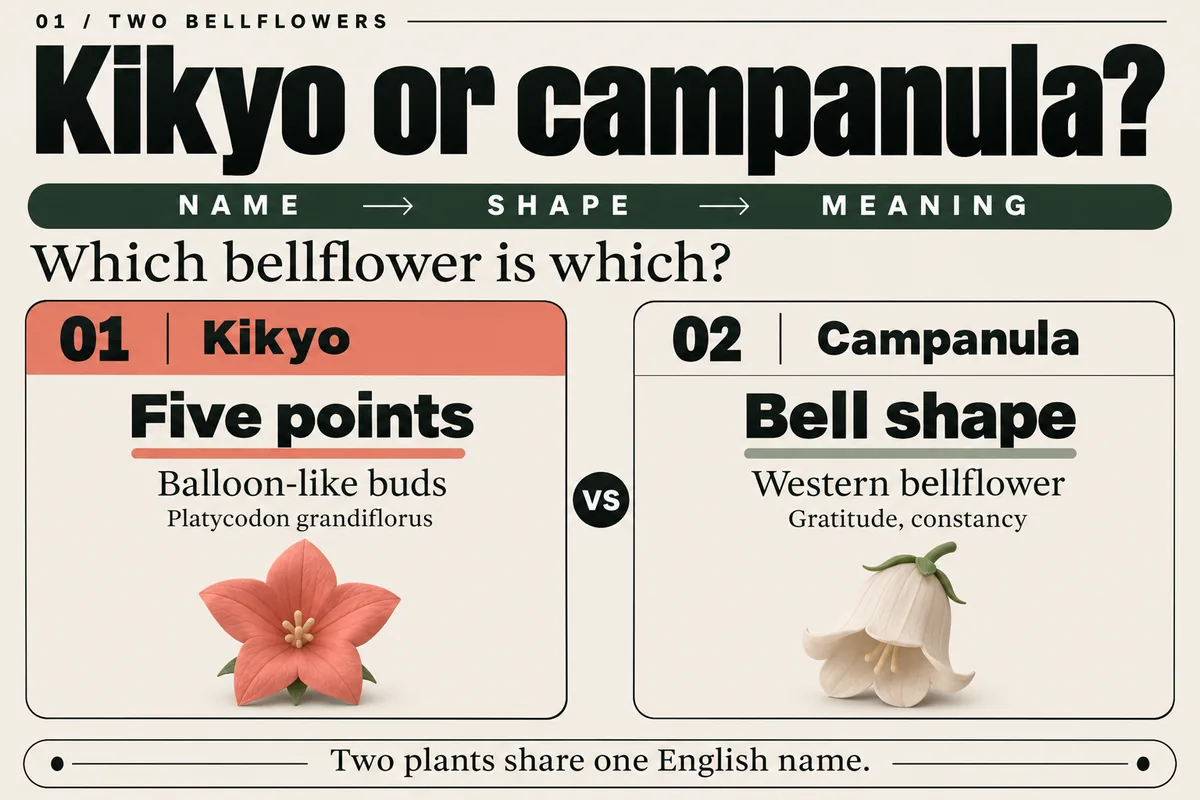
The kikyo is not only a beautiful flower but also a significant element in Japanese art and design. Its five-pointed star shape has been incorporated into various motifs, including family crests and textile designs. The kikyo's association with sincerity and honesty makes it a popular choice for traditional Japanese clothing, such as haori and yukata, where it adds a subtle yet meaningful touch. The kikyo's blue-violet color, which is the most common, is often used in these designs, but white and pink garden forms are also appreciated for their unique beauty and symbolism. The quiet colors of the kikyo make it a versatile motif that can be used in both formal and casual settings, enhancing the overall aesthetic of the garment.
Kikyo in Family Crests
The kikyo's five-pointed star shape has made it a popular choice for family crests, known as kamon, in Japan. Several samurai families, including the Toki clan and Akechi Mitsuhide, are known to have used the kikyo as their family crest. The most famous example is Akechi Mitsuhide, a prominent figure in Japanese history, who adopted the kikyo as his kamon. This association with powerful and influential families has added to the kikyo's symbolic significance.
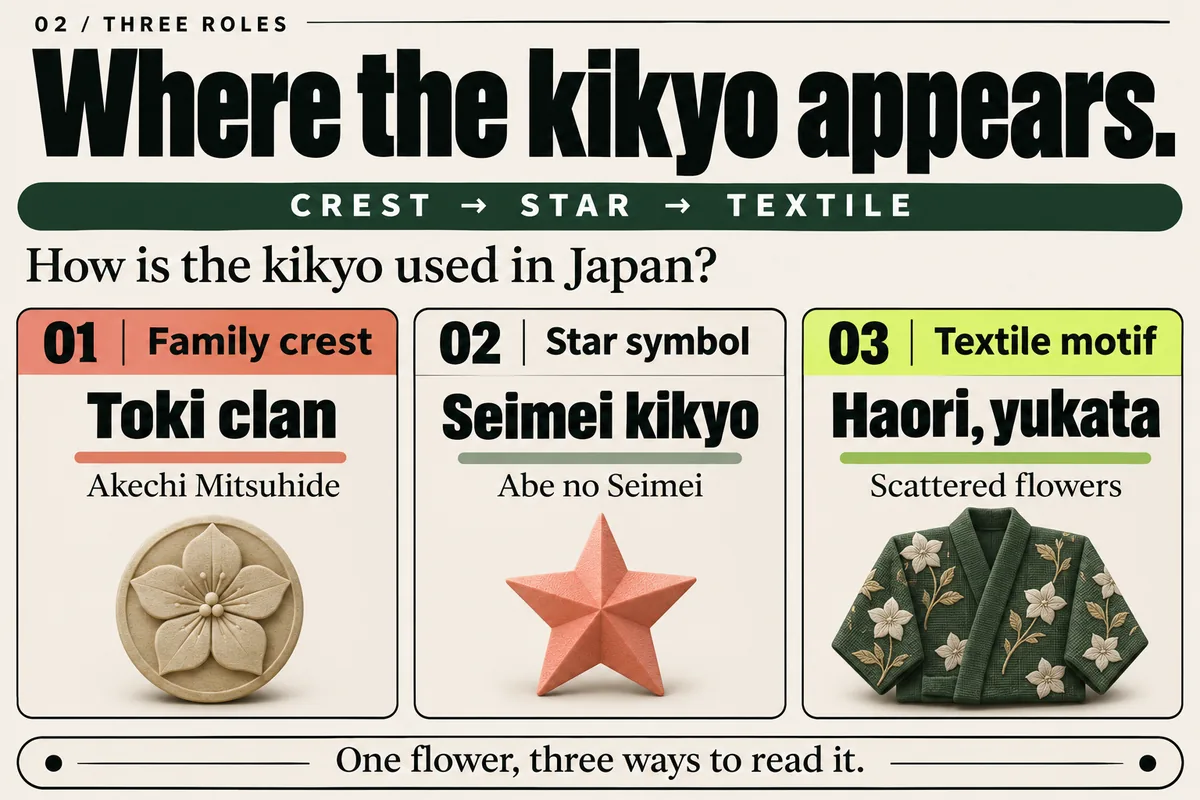
Additionally, the kikyo is linked to the legendary Heian-period onmyoji, Abe no Seimei. His five-pointed star symbol, known as the Seimei kikyo, is a well-known representation of the kikyo's shape. This connection to Abe no Seimei, a revered figure in Japanese folklore, further enhances the kikyo's cultural importance and mystical connotations. Crest use is documented history, while meanings such as sincerity and honesty come from modern flower language. Recognizing a kikyo crest by its five-pointed star shape can help you appreciate its historical and cultural significance.
One of the Seven Autumn Flowers
The kikyo is one of the seven autumn flowers, known as aki no nanakusa, which are celebrated in Japanese poetry and literature. This tradition dates back to a poem by Yamanoue no Okura in the Man'yoshu, one of the oldest collections of Japanese poetry. The poem lists seven flowers that bloom in autumn, each with its own unique beauty and significance. The kikyo, known for its blue-violet blooms, is often associated with the poem's asagao, which is traditionally read as the kikyo.
Being one of the seven autumn flowers, the kikyo is a symbol of the changing seasons and the transient beauty of nature. Its inclusion in this prestigious list highlights its cultural and aesthetic value in Japanese society. The kikyo's appearance in autumn also makes it a popular motif in seasonal decorations and traditional Japanese clothing, where it represents the transition from summer to fall. The kikyo's role in this poetic tradition underscores its importance in Japanese cultural heritage, where it is celebrated for its beauty and symbolic meaning. The kikyo's presence in these poetic and cultural contexts adds to its overall significance and appeal.
Bellflower Colors and Their Meanings
While the kikyo is typically blue-violet, it can also be found in white and pink garden forms. The blue-violet kikyo, the most common variety, is associated with sincerity and honesty, reflecting its deep cultural significance. White and pink forms are mostly garden varieties, and flower-language lists do not agree on separate meanings for them, so the blue-violet kikyo carries the traditional associations.
In contrast, the silver bell, a different plant (Halesia), is a tree with white bell-shaped flowers. While it shares a similar name, the silver bell does not have the same symbolic meaning as the kikyo. The silver bell has no fixed meaning in Japanese tradition and is not typically used in the same cultural contexts as the kikyo. The kikyo's unique color variations and symbolic meanings make it a versatile and meaningful choice in Japanese art and design. Understanding the different colors and their meanings can help you appreciate the kikyo's role in various cultural and artistic expressions.
The Kikyo as a Textile and Embroidery Motif
The kikyo's beauty and symbolic significance have made it a popular motif in Japanese textiles, particularly in traditional clothing like haori and yukata. The Kikyo Bellflower & Dragonfly Embroidered Haori is a deep indigo haori with ecru and sage bellflower sprays scattered from the left chest to the hem, with a single dragonfly on the right sleeve. The relaxed, unisex style is made from a mid-weight cotton-linen twill, making it a versatile and stylish choice for those who appreciate traditional Japanese aesthetics. This haori can be worn over a plain tee with straight trousers, adding a touch of elegance and cultural significance to any outfit.
Another example is the Kamon Crest Chenille Varsity Jacket, which pairs an ink-colored wool-blend melton body with bone-colored leather sleeves. The jacket features a large, original kamon-style chenille patch on the back, along with chain-stitch script on the chest. The patch is an original crest-style design, not a kikyo crest and not a real family's crest. The Kamon Crest Chenille Varsity Jacket is an original kamon-style design that blends traditional Japanese elements with modern fashion, making it a unique and eye-catching piece.
Frequently Asked Questions
What does the Japanese bellflower symbolize?
The Japanese bellflower, known as kikyo (Platycodon grandiflorus), symbolizes sincerity, honesty, and unchanging love in Japanese hanakotoba, the language of flowers. Its five-pointed star shape is often associated with these qualities and is a common motif in traditional Japanese art and textiles. Recognizing a kikyo crest by its five-pointed star shape can help you appreciate its historical and cultural significance.
What is another name for a bell flower?
Another name for a bell flower is campanula, derived from its bell-shaped blooms. However, in Japan, the kikyo (Platycodon grandiflorus) is a different species with a balloon-like bud that opens into a five-pointed star. Understanding the difference between these two species can help you appreciate their unique characteristics and symbolic meanings.
What do silver bell flowers symbolize?
Silver bell flowers, also known as Halesia, are a different plant from the kikyo. However, they do not carry the same symbolic meaning as the Japanese kikyo. Recognizing the kikyo's unique shape and symbolism can help you distinguish it from other bell-shaped flowers.
Is the kikyo the same as the Western bellflower?
No, the kikyo (Platycodon grandiflorus) is a different species from the Western bellflower (Campanula). While both have bell-shaped blooms, the kikyo's buds swell like small balloons before opening into a five-pointed star, distinguishing it from the Western campanula. Understanding the kikyo's unique features can help you appreciate its cultural and symbolic significance in Japanese art and textiles.
Conclusion
The bellflower, carries two sets of meanings: the Western bellflower stands for gratitude and constancy, and the Japanese kikyo for sincerity and honesty. Its unique shape and cultural significance make it a familiar motif in Japanese art and textiles. Whether you encounter the kikyo in a garden, a tattoo, or on haori jackets and other traditional clothing, its presence adds a layer of meaning and beauty to any setting. Recognizing the kikyo by its five-pointed star shape and understanding its cultural and symbolic significance can enhance your appreciation of this beautiful and meaningful flower.


