

Deer usually symbolize gentleness, intuition, renewal, and grace. In Japan, they carry a sacred meaning too: in Shinto, deer are seen as messengers of the gods, which is why the deer of Nara around Kasuga Taisha are protected, and deer with autumn maple leaves is a classic seasonal pairing in Japanese art. Below, deer symbolism is traced from its widely shared meanings to the Japanese tradition.
Key Takeaways
- In Shinto, deer are revered as messengers (shinshi) of the gods, symbolizing protection and divine communication.
- The deer of Nara, particularly around Kasuga Taisha, are protected as a Natural Monument and are considered sacred.
- Deer and maple leaves (momiji ni shika) are a classic autumn pairing in Japanese art, evoking themes of longing and the changing seasons.
- A pair of deer often symbolizes harmony, partnership, and devotion.
- Deer motifs on Japanese clothing, such as sukajan jackets, often feature autumn themes, reflecting a gentle and positive symbolism.
Table of Contents
- What Does a Deer Symbolize?
- Deer as Messengers of the Gods in Shinto
- The Deer of Nara and Kasuga Taisha
- Deer and Maple: An Autumn Pairing in Japanese Art
- Deer Motifs on Japanese Clothing
- Is a Deer a Good Luck Sign?
- Frequently Asked Questions
What Does a Deer Symbolize?
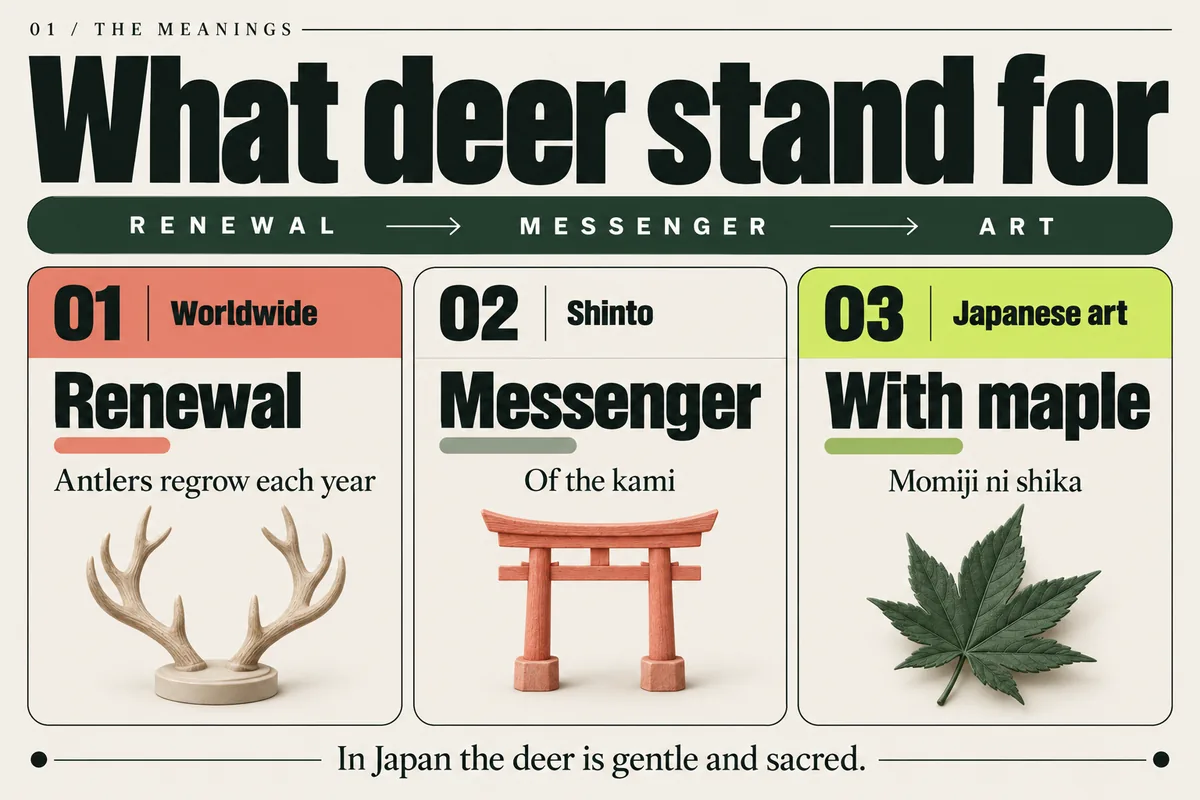
Deer have been imbued with deep symbolic meanings across various cultures. Generally, they symbolize gentleness, grace, intuition, and renewal. The deer's ability to shed and regrow its antlers each year is often interpreted as a metaphor for personal growth and transformation. This shedding and regrowth cycle is a powerful symbol of renewal and resilience, reflecting the deer's ability to adapt and thrive. In European and Celtic folklore, the white stag is a mystical creature that leads hunters into the unknown, symbolizing the pursuit of spiritual enlightenment. Native American traditions often associate deer with gentleness and sensitivity, emphasizing their connection to nature and the spirit world. However, these interpretations can vary by culture and are not universally fixed, allowing for a rich tapestry of meanings.
Deer as Messengers of the Gods in Shinto
In Japanese culture, deer hold a particularly sacred place, especially within the Shinto religion. In Shinto, deer are known as shinshi, or messengers of the gods. A shinshi is a divine messenger that conveys the will of the kami (gods) to the human world. The deer, as a shinshi, is believed to bridge the gap between the spiritual and physical realms, bringing divine messages and protection. This belief is deeply rooted in ancient Japanese mythology. According to legend, the deity Takemikazuchi arrived from Kashima riding a white deer to establish the shrine at Kasuga Taisha in Nara. As a result, the deer of Nara are treated with great reverence and are protected as a Natural Monument. Visitors to Nara Park can witness these sacred animals roaming freely and even purchase shika senbei crackers to feed them.
The Deer of Nara and Kasuga Taisha
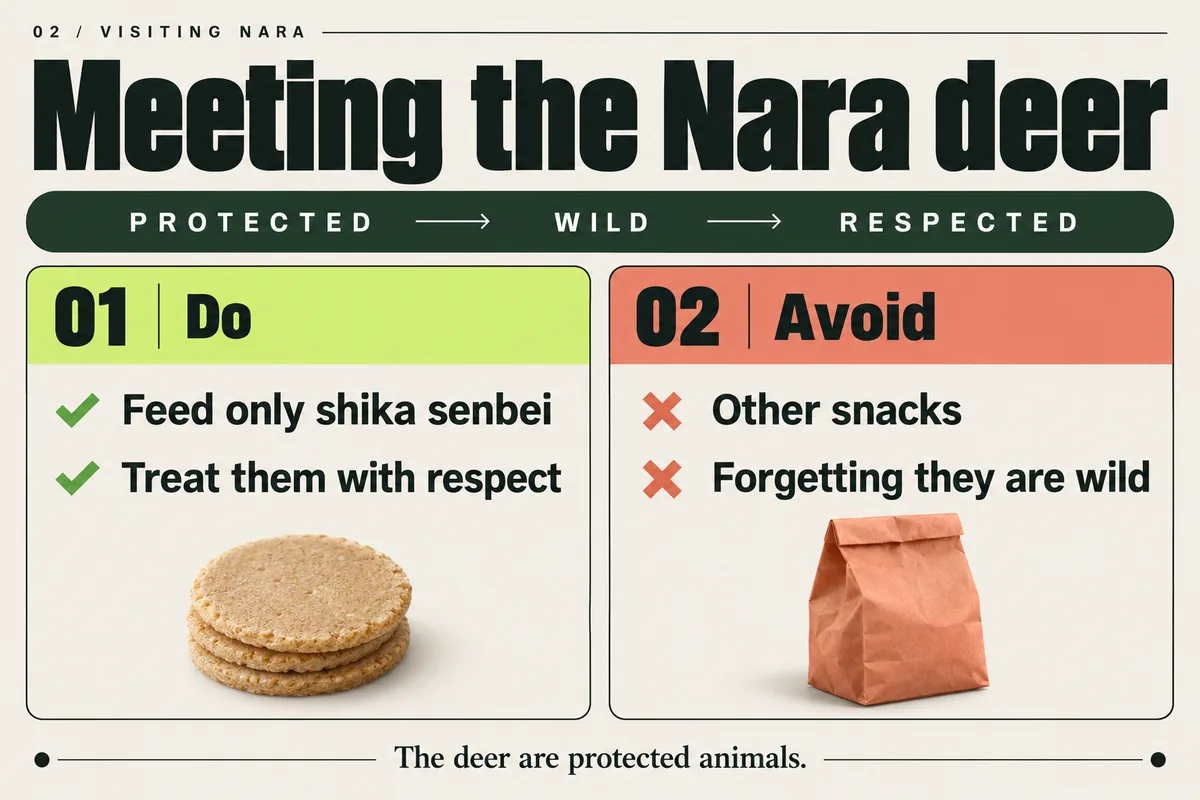
The deer of Nara, particularly those around Kasuga Taisha, are a living testament to the deep spiritual significance of deer in Japanese culture. Founded in 768, Kasuga Taisha is one of the most important Shinto shrines in Japan. The legend of the white deer that brought the deity Takemikazuchi to Nara has been passed down through generations, reinforcing the sacred status of these animals. Today, the deer of Nara Park are a popular attraction, and visitors can interact with them in a unique and meaningful way. Some deer have even learned to bow, adding to the mystical charm of the experience. When you visit, remember that the deer are wild, protected animals: feed them only the senbei sold for them and treat them with respect.
Deer and Maple: An Autumn Pairing in Japanese Art
The pairing of deer and maple leaves, known as momiji ni shika, is a classic theme in Japanese art and poetry. This combination is often used to evoke the beauty and melancholy of autumn, a season of change and reflection. The call of the stag in autumn is a common motif in classical Japanese poetry, symbolizing longing and the passage of time. This imagery appears on the October card of hanafuda, the traditional Japanese flower cards, and is a frequent subject in both visual and literary arts. The deer and maple leaves together create a harmonious and evocative scene that captures the essence of the season. In the hanafuda, the October card features a deer among maple leaves, and the deer is part of the ino-shika-cho (boar, deer, butterfly) combination, further emphasizing the deer's significance in Japanese culture.
Deer Motifs on Japanese Clothing
Deer motifs are a popular design element in Japanese clothing, particularly in traditional and contemporary styles. Sukajan, or souvenir jackets, can carry deer designs, usually paired with autumn themes. The Shika Deer & Autumn Grasses Reversible Sukajan by Sukaizen is one example, with a standing deer and autumn grasses embroidered on a moss-on-ink back. The oat reverse has grass detail on the sleeves, creating a balanced and visually appealing design. It has a rayon-satin shell and a polyester reverse, with machine embroidery on both faces. The relaxed unisex fit, available in sizes M to 4XL, makes it a versatile addition to any wardrobe.
Similarly, the Momiji Maple Reversible Haori by Sukaizen features scattered rust maple leaves on one side and solid ink with a small crest at the hip on the other. The open front design of this haori, a traditional Japanese open-front jacket, adds a touch of elegance and versatility to your outfit. Both pieces reflect the gentle and positive symbolism of deer and autumn, suiting those who appreciate the beauty of traditional Japanese aesthetics. The kirin is a separate mythical guardian creature, not a deer; it appears on Sukaizen's Kirin Embroidered Hoodie, offering a different but equally compelling mythical presence.
How to Wear a Deer Motif
Wearing a deer motif can evoke an autumn mood and add a touch of elegance to your outfit. For a classic autumn look, pair a moss and ink jacket with plain dark trousers. The moss and ink colors complement the natural and serene feel of the deer motif. Consider a reversible piece, such as the Shika Deer & Autumn Grasses Reversible Sukajan, which allows you to switch between two different looks, making it a versatile addition to your wardrobe.
Is a Deer a Good Luck Sign?
In Japan, deer are generally associated with positive and gentle symbolism. While there is no specific rule that seeing a deer brings luck, the connection between deer and shrines, as well as their role as divine messengers, imbues them with a sense of protection and good fortune. This tradition of deer being seen as protectors and messengers is deeply rooted in Japanese culture, though it is not a promise of luck but rather a symbol of divine presence and guidance. On clothing, a deer motif reads as a quiet, gentle choice rather than a lucky charm.
Frequently Asked Questions
What is the spiritual meaning of deer?
The spiritual meaning of deer varies across cultures but generally includes gentleness, grace, intuition, and renewal. In many European and Celtic stories, the white stag leads a hunter into the unknown, symbolizing the pursuit of spiritual enlightenment. Native American traditions often link deer with gentleness and sensitivity, emphasizing their connection to nature and the spirit world. In Japan, deer are revered as messengers of the gods, symbolizing protection and divine communication.
Is deer a good luck?
In Japan, deer are generally seen as positive and gentle symbols. While there is no specific rule that seeing a deer brings luck, their association with shrines and their role as divine messengers in Shinto imbues them with a sense of protection and good fortune. This tradition is rooted in the belief that deer serve as a link between the spiritual and physical worlds.
What messages do deer bring?
In Shinto, deer are considered messengers (shinshi) of the gods. They are believed to convey divine messages and serve as a link between the spiritual and physical worlds. The presence of deer, especially in sacred places like Nara, is seen as a sign of divine communication and protection. Their messages often relate to guidance, protection, and the presence of the divine in everyday life.
What does a pair of deer symbolize?
A pair of deer often symbolizes harmony, partnership, and devotion. This imagery is common in various cultures and is particularly significant in Japanese art and poetry, where it evokes themes of unity and mutual support. In Japanese culture, a pair of deer can represent a harmonious relationship or a strong bond between individuals. The symbolism of a pair of deer extends beyond mere companionship to encompass a deeper sense of connection and mutual respect, reflecting the values of partnership and devotion in both personal and spiritual contexts.
Conclusion
The deer, a symbol of gentleness, intuition, and renewal, holds a special place in Japanese culture, particularly within the Shinto religion. From the sacred deer of Nara to the evocative imagery of deer and maple leaves in art, the deer's symbolism is rich and multifaceted. Whether depicted on traditional Japanese clothing or revered in sacred spaces, the deer remains a gentle and positive symbol, carrying a sense of protection and divine connection.


