

In Japan, the maple, or momiji, symbolizes autumn, the beauty of change, and the passing of time. Its red leaves are celebrated in momijigari, autumn leaf viewing, and in poetry and art, often paired with deer or flowing water. As a clothing motif, it signals the season and a reflective, graceful mood. Below, the japanese maple meaning is traced through its two names, autumn leaf viewing, classic art pairings and the way the motif is worn today.
Key Takeaways
- Core meaning: The Japanese maple, or momiji, symbolizes autumn, change, and the passing of time.
- Momijigari: Momijigari, the custom of viewing autumn leaves, is a popular tradition in Japan, much like hanami for cherry blossoms in spring.
- Art pairings: The maple leaf is often paired with deer and flowing water in Japanese poetry and art, marking the autumn season.
- Clothing motif: As a clothing motif, the maple leaf is used to signal the season and evoke a reflective, graceful mood.
- Tattoos: Modern interpretations of the maple leaf tattoo often symbolize change, the passing of time, or a new chapter.
Table of Contents
- What Does the Japanese Maple Symbolize?
- Momiji and Kaede: The Words Behind the Tree
- Momijigari: Autumn Leaf Viewing
- Maple in Japanese Art: Deer, Rivers and Poems
- Momiji as a Clothing and Tattoo Motif
- Wearing the Maple Motif Today
- Frequently Asked Questions
What Does the Japanese Maple Symbolize?
The Japanese maple, scientifically known as Acer palmatum, is renowned for its small, hand-shaped leaves that turn vibrant red, orange, or gold in autumn. Beyond its aesthetic appeal, the maple holds deep symbolic meaning in Japanese culture. It is a powerful emblem of autumn, the beauty of change, and the transient nature of life. The falling maple leaf is a poignant reminder of the fleeting beauty of the world, a central theme in Japanese aesthetics known as mono no aware, which celebrates the impermanence and fragility of all things.
In Japanese literature and art, the maple is often depicted as a symbol of maturity and a quiet, reflective mood. It is a time for introspection and appreciation of the subtle, transient moments in life. The maple's changing colors are a metaphor for the cyclical nature of life, where each season brings its own unique beauty and challenges. The leaf's color transition from green to red, gold, and orange mirrors the stages of life, with autumn read as a time of maturity and wisdom, reflecting the deep connection between nature and human experience.
Momiji and Kaede: The Words Behind the Tree
In Japanese, the maple tree is known by two distinct words: kaede and momiji. Kaede is the more general term for the tree, often traced to the word kaerude, meaning "frog's hand," due to the leaf's shape resembling a frog's hand. Momiji, on the other hand, specifically refers to the autumn coloring and, by extension, the red maple leaves. The word momiji comes from an old verb meaning "to turn crimson," capturing the vivid transformation of the leaves during autumn.
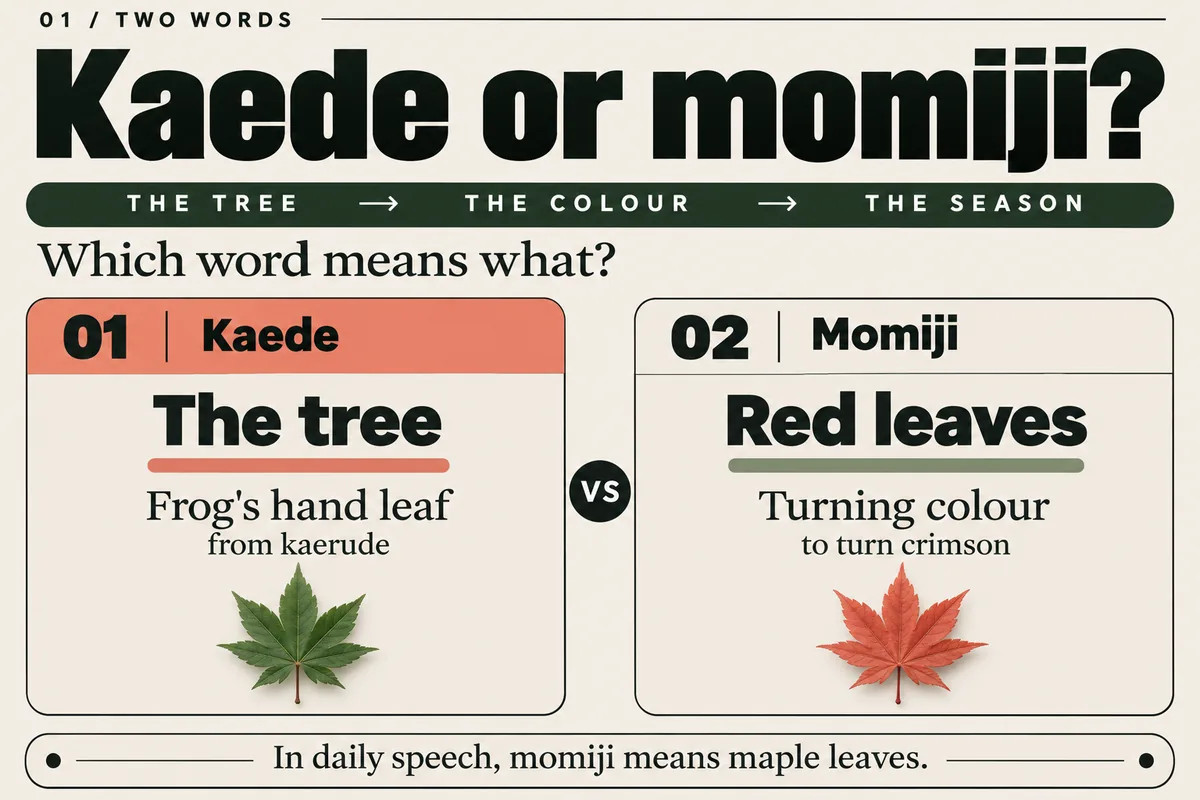
In daily speech, momiji is commonly used to refer to maple leaves, particularly during the autumn season. The distinction between kaede and momiji reflects the nuanced appreciation of nature in Japanese culture, where the changing colors of the leaves are as important as the tree itself. This linguistic detail underscores the deep connection between the Japanese people and the natural world, where even the smallest details are imbued with meaning. The word momiji is often used in seasonal greetings and on clothing, where the red-leaf motif is a popular choice for autumn-themed designs, while kaede is more commonly used to refer to the tree itself in everyday contexts.
Momijigari: Autumn Leaf Viewing
Momijigari, the custom of viewing autumn leaves, is a beloved tradition in Japan, much like hanami (cherry blossom viewing) in spring. The practice dates back to the Heian period, when aristocrats would venture out to admire the vibrant colors of the changing leaves. Today, momijigari is a popular activity enjoyed by people of all ages, with many famous viewing spots across the country.
Kyoto, with its numerous temples and gardens, is a particularly popular destination for momijigari. Temples such as Tofuku-ji and Nanzen-ji are known for their breathtaking displays of autumn foliage. Mountain valleys, such as those in Nikko and the Arashiyama district of Kyoto, also offer stunning views of maple trees in full color. The tradition of momijigari reflects a deep appreciation for the natural world and the beauty of seasonal change, a sentiment that continues to resonate in modern Japanese culture.
Maple in Japanese Art: Deer, Rivers and Poems
The maple is a recurring motif in Japanese art, often paired with other elements to create rich, symbolic compositions. One classic pairing is the maple with deer, known as momiji ni shika. This combination is a common theme in poetry and visual art, representing the serene and reflective nature of autumn. The deer, a symbol of grace and elegance, is often depicted alongside the maple, creating a harmonious and balanced scene. The deer-and-maple pairing also appears on the October card of hanafuda, the Japanese flower cards, further emphasizing its cultural significance.
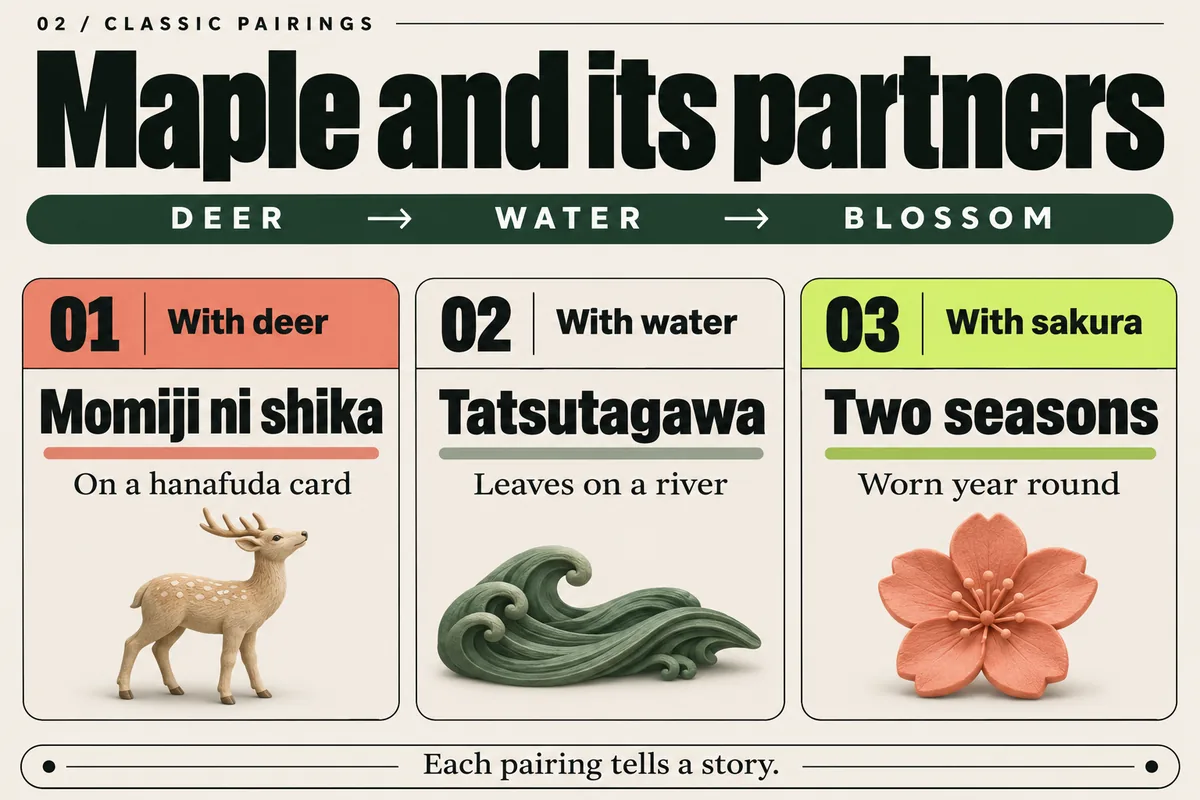
Another classic pairing is the maple with flowing water, symbolizing the continuous flow of life and the impermanence of all things. This motif is frequently seen on kimono and lacquerware, where the maple leaves are often depicted floating on water, creating a sense of tranquility and beauty. The Hyakunin Isshu, a renowned anthology of one hundred poems, includes a famous poem by Ariwara no Narihira (number 17) that describes the Tatsuta River dyed crimson by maple leaves. The Tatsuta River in Nara became so closely associated with maples that the pattern of maple leaves floating on water is known as tatsutagawa, a symbol of the ephemeral beauty of autumn.
Momiji as a Clothing and Tattoo Motif
The maple leaf has been a popular motif in Japanese clothing for centuries, particularly in kimono and other textiles. As a seasonal marker, the maple leaf signals the arrival of autumn and evokes a reflective, graceful mood. Traditional kimono designs often feature maple leaves in various colors, sometimes combined with other motifs such as cherry blossoms to create garments that can be worn across seasons. A maple-and-water design, inspired by the Tatsuta River, is a particularly evocative motif, symbolizing the continuous flow of life and the transient beauty of nature.
In modern times, the maple leaf has also gained popularity as a tattoo motif. While traditional Japanese tattoos (irezumi) often feature more elaborate and mythological subjects, the maple leaf is increasingly chosen for its symbolic meaning. Modern interpretations of the maple leaf tattoo often symbolize change, the passing of time, or a new chapter in life. The leaf's transformation from green to red is a powerful metaphor for personal growth and transformation, making it a meaningful choice for those seeking to mark a significant life change.
Wearing the Maple Motif Today
Today, the maple motif continues to be a popular choice for those looking to incorporate Japanese aesthetics into their wardrobe. The Momiji Maple Reversible Haori, for example, has scattered rust maple leaves on one side and a solid ink color on the reverse, allowing for two distinct looks. This unisex haori is ideal for layering over a plain tee or knit in autumn, and the solid ink side provides a quieter, more understated option.
Another maple-season piece is the Shika Deer & Autumn Grasses Reversible Sukajan, which features a standing deer and autumn grasses on the moss-on-ink back. The oat reverse has grass detail on the sleeve, adding a subtle touch of nature to the design.
Sukaizen embroiders both on Tajima embroidery machines with polyester thread. As reversible jackets, each gives two looks in one piece: a bold motif side for autumn and a quiet side for everything else.
Frequently Asked Questions
What does Japanese maple symbolize?
The Japanese maple, or momiji, symbolizes autumn, the beauty of change, and the passing of time. It is often associated with a quiet, reflective mood and the transient nature of life, reflecting the Japanese aesthetic of mono no aware, which celebrates the impermanence and fragility of all things.
What is the spiritual meaning of the maple tree?
The spiritual meaning of the maple tree in Japanese culture is deeply tied to the beauty of change and the passing of time. It symbolizes the transient nature of life and the importance of appreciating the fleeting moments of beauty in the world. The falling maple leaf is a powerful metaphor for the cyclical nature of life and the continuous flow of time.
What is so special about Japanese maples?
Japanese maples are special because of their unique, hand-shaped leaves that turn vibrant red, orange, or gold in autumn. Beyond their aesthetic beauty, they hold deep cultural and symbolic significance in Japan. The maple is a powerful emblem of autumn, change, and the transient nature of life, reflecting the Japanese appreciation for the beauty of impermanence.
What does a maple leaf symbolize?
A maple leaf symbolizes change, the passing of time, and the beauty of impermanence. In Japanese culture, the maple leaf is particularly associated with autumn and the reflective, graceful mood of the season. It is often used in art, poetry, and clothing to mark the arrival of autumn and evoke a sense of quiet contemplation.
Conclusion
The Japanese maple, or momiji, is more than just a beautiful tree; it is a symbol of autumn, change, and the passing of time. Whether viewed in nature, depicted in art, or worn as a clothing motif, the maple leaf evokes a reflective and graceful mood, reminding us of the transient beauty of life. By incorporating the maple motif into our wardrobes, we can carry a piece of this timeless symbolism with us, celebrating the beauty of change and the cyclical nature of life.


