

Japanese dragonfly, tombo, symbolizes victory, courage, and a good harvest. Samurai called it kachimushi, the victory insect, because it darts forward and is said never to retreat, and wore it on helmets and gear. Old texts even call Japan Akitsushima, the island of dragonflies. This article delves into the rich cultural significance of the dragonfly in Japanese tradition and how it has influenced art, literature, and even modern fashion.
Key Takeaways
- Symbolism: The dragonfly, or tombo, represents victory, courage, and a good harvest in Japanese culture.
- Historical Name: Japan is referred to as Akitsushima, or "dragonfly island," in ancient texts.
- Samurai Tradition: Samurai called the dragonfly kachimushi, the victory insect, and wore it on their armor and gear.
- Autumn Sign: The red dragonfly, aka tombo, is a sign of autumn and features in a popular children's song.
- Art and Design: The dragonfly motif appears in Japanese textiles, kimono patterns, and modern clothing, symbolizing success and forward movement.
Table of Contents
- What Is the Dragonfly Called in Japanese?
- Akitsushima: Japan as Dragonfly Island
- Kachimushi: Why Samurai Called It the Victory Insect
- Aka Tombo: The Red Dragonfly of Autumn
- Dragonflies, Rice Fields and the Harvest
- The Dragonfly in Japanese Art, Kimono and Design
- Wearing the Dragonfly Today
- Frequently Asked Questions
What Is the Dragonfly Called in Japanese?
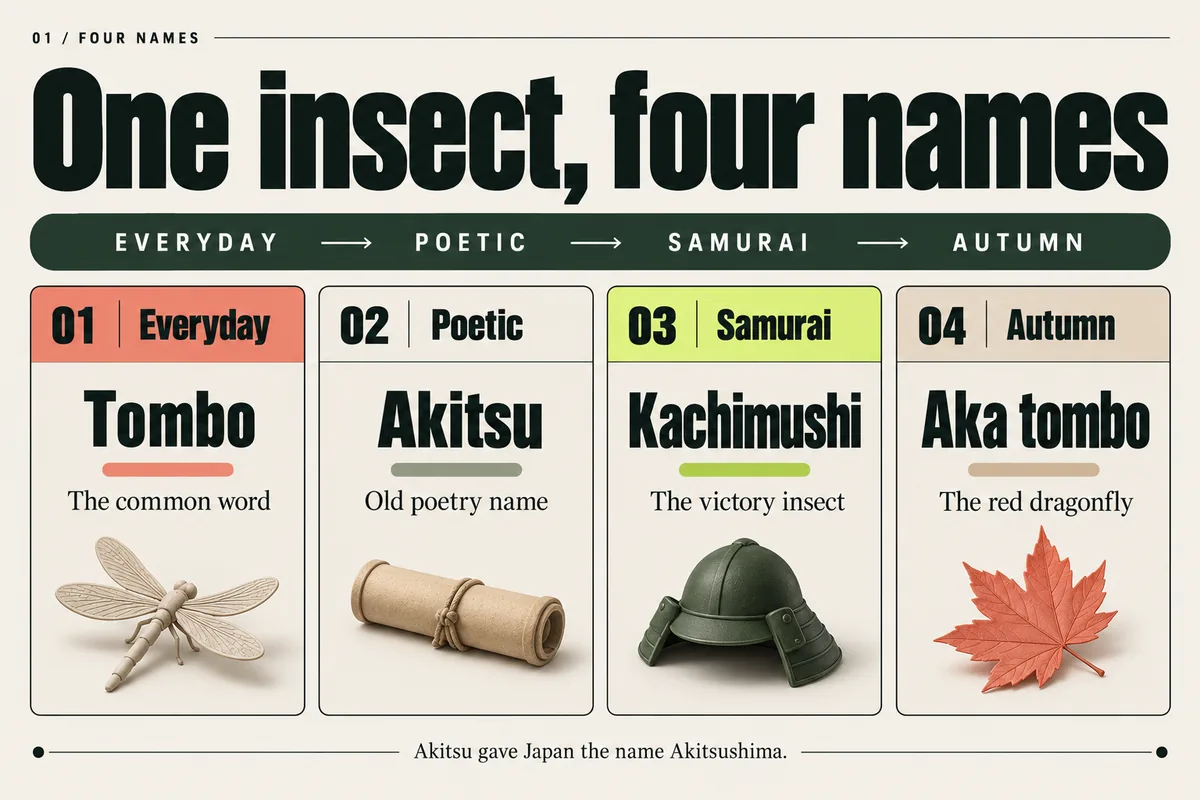
In everyday Japanese, the dragonfly is called tombo (トンボ or 蜻蛉). This simple yet elegant word captures the essence of these agile insects. However, there are other terms that add layers of meaning and cultural depth. For instance, akitsu is an old poetic word for dragonfly, often used in classical literature and poetry. Another term, yanma, refers specifically to large dragonflies, such as the oniyanma, which is one of the largest in Japan, measuring more than 10 cm in length. These different names reflect the deep connection between the Japanese people and the natural world, where even the smallest details in language carry significant cultural weight. The use of akitsu in ancient texts and poetry highlights the dragonfly's importance in Japanese literary and cultural traditions, often symbolizing the fleeting nature of life and the beauty of the natural world.
Akitsushima: Japan as Dragonfly Island
In the Kojiki and the Nihon Shoki, Japan's oldest chronicles, Honshu is referred to as Akitsushima, or "dragonfly island." According to the story, Emperor Jimmu looked out over the land and compared its shape to a dragonfly, hence the name. This poetic description not only highlights the beauty of the landscape but also underscores the deep respect the ancient Japanese had for these insects. The legend of Emperor Jimmu looking over the land and likening it to a dragonfly is a powerful metaphor for the unity and harmony of nature and human civilization in Japan. Another tale from the Nihon Shoki tells of a dragonfly snatching a horsefly that bit Emperor Yuryaku, further cementing the dragonfly's role as a protector and symbol of divine favor. The name Akitsushima has become a symbol of Japan's natural and cultural heritage, reflecting the country's rich biodiversity and the enduring presence of dragonflies in its ecosystem.
Kachimushi: Why Samurai Called It the Victory Insect
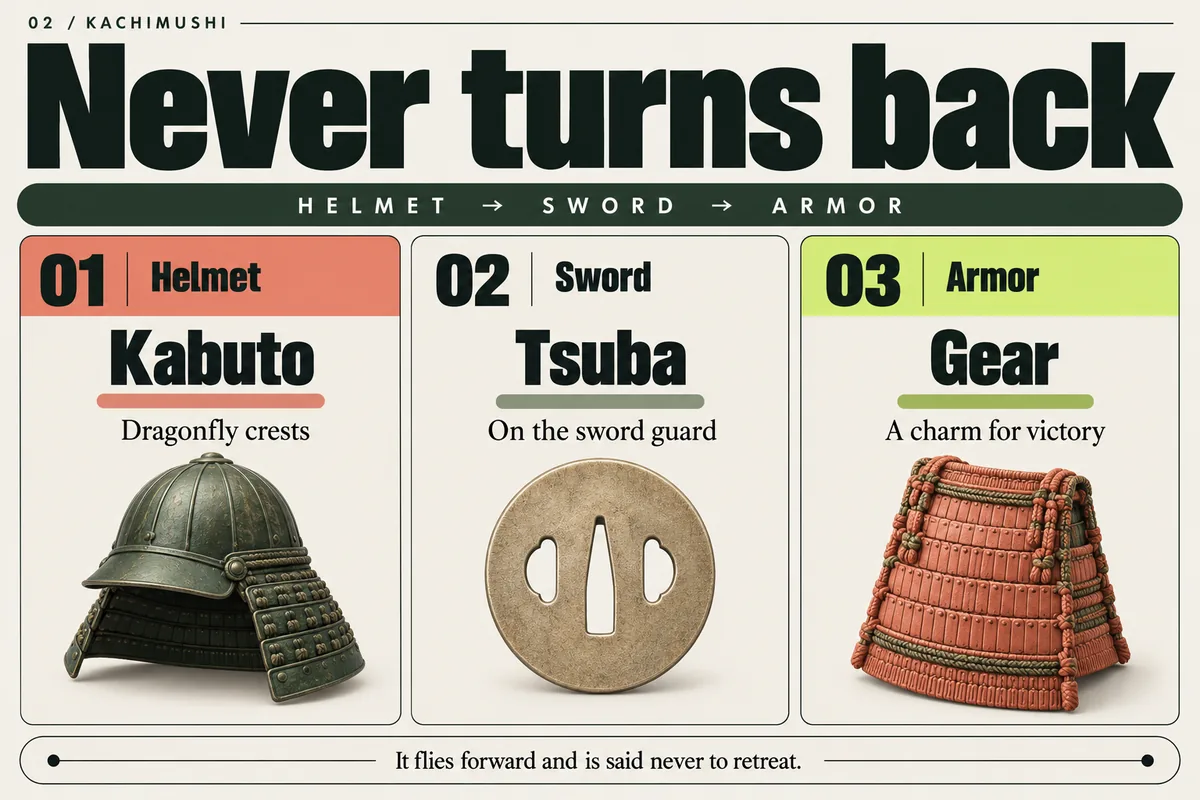
By tradition, samurai called the dragonfly kachimushi, the victory insect, because it flies forward and is said never to retreat. This characteristic was seen as a symbol of courage and determination, qualities highly valued by the samurai. In the 17th century, some daimyo (feudal lords) even wore dragonfly-shaped helmets, and the motif appeared on armor, sword fittings, and other gear. The wider symbolism samurai carried into battle included the dragonfly as a powerful talisman for victory and success. The dragonfly's forward flight and refusal to retreat were seen as a metaphor for the samurai's unwavering resolve and honor. Dragonfly motifs were also used on kabuto helmets, tsuba (sword guards), and jinbaori (surcoats), emphasizing the connection between the insect's attributes and the samurai's code of conduct. The kachimushi dragonfly victory sukajan, an ink-navy rayon satin sukajan with three dragonflies rising diagonally across the back and a smaller one at the left chest, continues to carry this powerful symbolism in modern times.
Aka Tombo: The Red Dragonfly of Autumn
The red dragonfly, aka tombo, is a sign of autumn in Japan. This particular species, usually the akiakane, is known for its vibrant red color and is often featured in a well-known children's song, "Akatombo." The appearance of the red dragonfly marks the transition from summer to fall, a time of reflection and preparation for the coming winter. In Japanese culture, the red dragonfly is not just a seasonal indicator but also a symbol of the fleeting nature of life and the beauty of change. Its presence in literature and art underscores the deep connection between nature and human experience. The folk belief linking dragonflies with ancestors' spirits returning at Obon adds another layer of cultural significance, as people believe that dragonflies may carry the souls of their departed loved ones back to the world of the living.
Dragonflies, Rice Fields and the Harvest
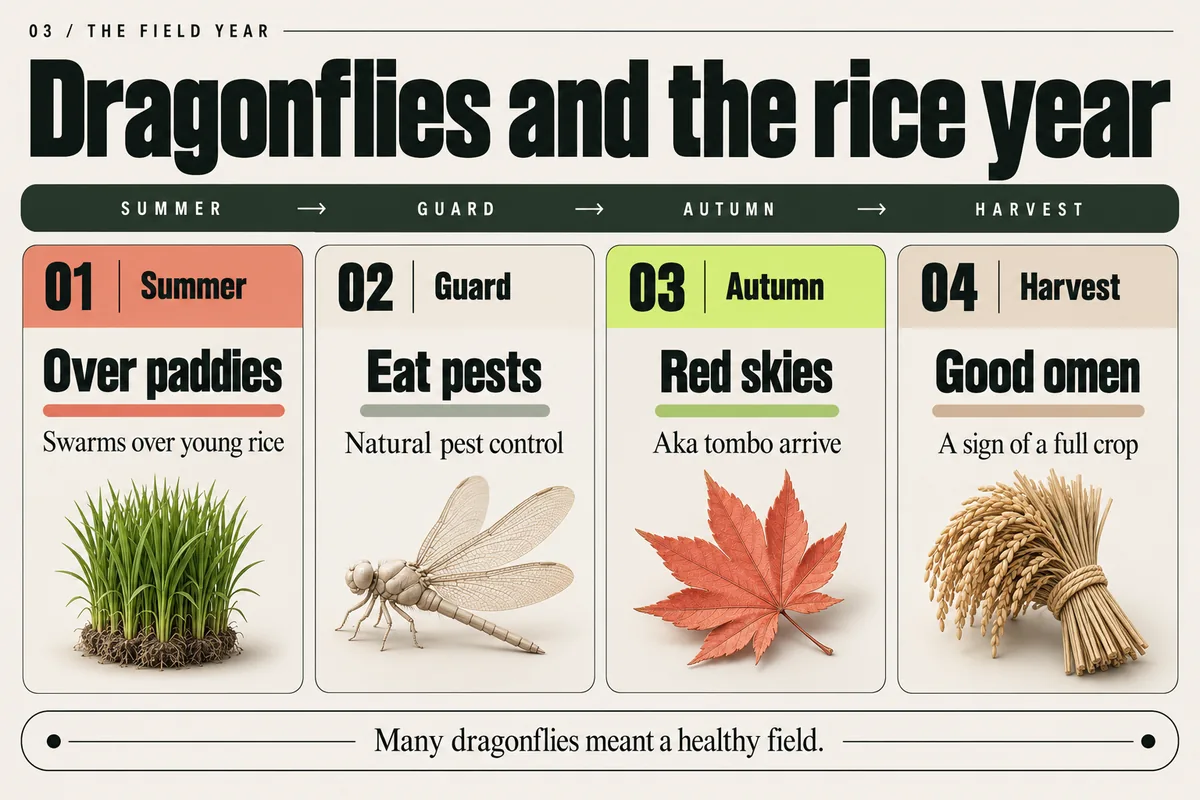
Dragonflies play a crucial role in the agricultural cycle of Japan, particularly in rice cultivation. They gather over rice fields, feeding on pests that can damage the crops. This natural pest control has led to the dragonfly being seen as a sign of a good harvest and linked to the spirit of the rice plant. The presence of dragonflies in the fields is often welcomed by farmers, who view them as a positive omen for a bountiful season. Dragonflies over rice paddies are a common sight during the summer and early autumn, and their presence is believed to ensure a healthy and productive harvest. This association with the rice plant and the harvest is deeply ingrained in Japanese folklore and tradition, symbolizing prosperity and abundance.
The Dragonfly in Japanese Art, Kimono and Design
The dragonfly has been a recurring motif in Japanese art, textiles, and design for centuries. It appears in kimono patterns, lacquerware, and woodblock prints, often symbolizing success and forward movement. The intricate designs and vibrant colors used to depict dragonflies reflect the beauty and grace of these insects, as well as the cultural values they represent. During the Edo period, dragonfly motifs were particularly popular, appearing on kimono, yukata, netsuke, and family crests (tombo mon). The dragonfly's association with victory and forward movement made it a favored symbol for samurai and their families, who often incorporated it into their armor and daily wear. In modern fashion, the dragonfly motif continues to be popular. For example, the kikyo bellflower and dragonfly haori, an open-front, hip-length haori in deep indigo cotton-linen twill with ecru and sage bellflower sprays and one dragonfly on the right sleeve, combines traditional symbolism with contemporary style.
Wearing the Dragonfly Today
The dragonfly motif has found its way into modern clothing and accessories, allowing people to carry its symbolic meaning in their daily lives. Here are three ways to incorporate the dragonfly into your wardrobe:
- Sukajan Jackets: The victory dragonfly sukajan, with its striking design and rich symbolism, is a statement piece that can be worn for special occasions or as a personal talisman.
- Haori: The bellflower and dragonfly haori offers an elegant and versatile option for layering, suited to both casual and formal settings.
- Accessories: Dragonfly-themed accessories, such as pins, earrings, and scarves, can add a touch of cultural significance to any outfit.
Frequently Asked Questions
What does the dragonfly symbolize in Japan?
The dragonfly, or tombo, symbolizes victory, courage, and a good harvest in Japan. It is also associated with the spirit of the rice plant and is seen as a positive omen for a bountiful season. The dragonfly's forward flight and refusal to retreat make it a powerful symbol of determination and success.
What are dragonflies called in Japan?
In Japan, dragonflies are called tombo (トンボ or 蜻蛉). Other terms include akitsu, an old poetic word that gave Japan the poetic name Akitsushima, and yanma, which refers to large dragonflies. Samurai also called them kachimushi, or the victory insect, and the red dragonfly of autumn is known as aka tombo, a name almost every child in Japan learns from the famous song.
Does Japan have dragonflies?
Yes, Japan has around 200 species of dragonflies, out of about 5,000 worldwide. They gather over rice paddies in summer and autumn, eating pests and filling the sky with red dragonflies in autumn. Their presence has long been tied to a good harvest and is celebrated in the countryside, such as in the song Akatombo.
What is the Japanese word for dragonfly?
The Japanese word for dragonfly is tombo (トンボ or 蜻蛉), usually written in katakana as トンボ. The kanji 蜻蛉 is more literary, and either way the word is pronounced tohm-boh. The old poetic word akitsu appears in early poetry, and samurai gave them the nickname kachimushi, meaning the victory insect.
Conclusion
The dragonfly, or tombo, carries a rich cultural significance that extends from ancient traditions to modern fashion. Whether as a symbol of victory, a sign of a good harvest, or a marker of the changing seasons, the dragonfly continues to inspire and resonate with people today. Incorporating the dragonfly motif into your wardrobe is a way to connect with this enduring cultural tradition and carry its positive symbolism with you.


