

A boro jacket is built from patched and layered indigo cloth, following the Japanese tradition of mending worn fabric with running stitches until it becomes a new textile. Antique boro is repaired by hand over decades; modern patched jackets recreate the patchwork look in new cotton, linen, or denim.
Key Takeaways
- Boro pieces are made from patched and layered indigo cloth, reflecting the Japanese tradition of mending.
- Sashiko is a running-stitch technique that often holds boro patches together, but a jacket can have sashiko without being boro.
- Antique patchwork jackets are unique, hand-mended pieces, while new jackets are machine-stitched and more consistent, easier to wear and wash.
- Patched jackets come in styles like the chore coat, denim jacket, and noragi, each with its own aesthetic and practical use.
- When buying a patched jacket, check the age, patch attachment method, stitch type, fabric weight, and fit.
Table of Contents
- What Is a Boro Jacket?
- Boro vs Sashiko: What the Difference Means for a Jacket
- Antique, Vintage and New Boro Pieces
- Boro Styles: Chore Coat, Noragi and Denim
- What to Check Before You Buy
- How to Wear and Care for Boro Outerwear
- Frequently Asked Questions
What Is a Boro Jacket?
A boro piece is a garment that embodies the Japanese principle of mottainai, which translates to a regret over waste. Boro (襤褸) means "rags" or "tattered cloth", and our guide to boro as a Japanese mending tradition covers its history in depth. In rural Japan, particularly in the northern Tohoku region during the 1800s and early 1900s, families would patch and layer worn indigo cotton repeatedly due to the scarcity of fabric. Over time, these mended pieces became a new textile, rich in history and character.
Modern boro pieces draw inspiration from this tradition, recreating the patchwork look with new materials. They often feature a mix of indigo panels, sashiko-style running stitches, and sometimes even applique details. These jackets are not just fashion statements; they are a nod to a culture that values sustainability and the beauty of imperfection.
Boro vs Sashiko: What the Difference Means for a Jacket
While boro and sashiko are closely related, they are distinct concepts. Boro refers to the patched and layered fabric, while sashiko is a running-stitch technique used to reinforce, quilt, and decorate cloth. Sashiko is often seen in white thread on indigo, forming straight lines or geometric patterns. A jacket can have sashiko without being boro, such as a piece of plain cloth stitched all over. Conversely, boro usually includes sashiko-style stitching to hold the patches together.
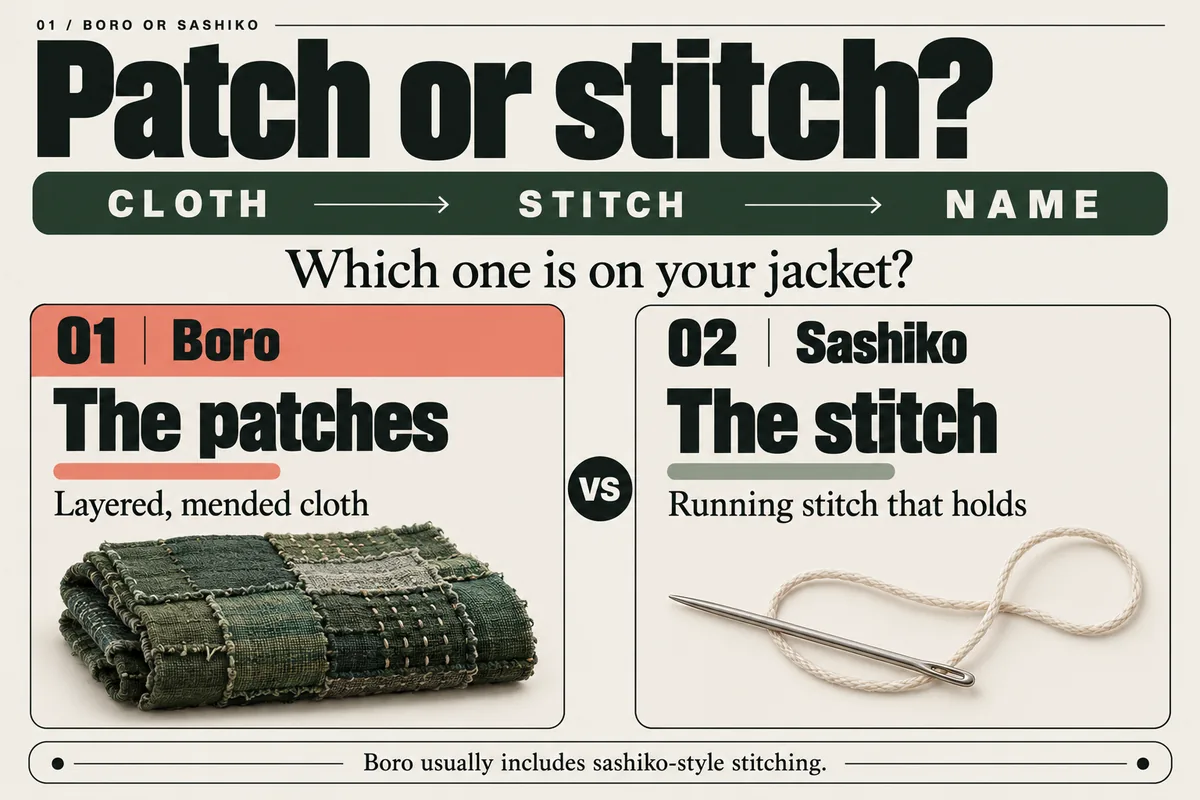
Understanding the difference is important when shopping for a patchwork jacket. If you are looking for a jacket with a traditional, hand-mended aesthetic, ensure it features both boro and sashiko elements. However, if you prefer a more modern, machine-stitched look, you can still find patchwork jackets that capture the essence of the tradition.
Antique, Vintage and New Boro Pieces
Antique jackets are hand-mended over decades, making each piece unique and fragile. These collectibles are often displayed in museums, such as the antique boro collection once shown at the Amuse Museum in Tokyo. Antique boro is priced as a collectible due to its rarity and historical significance.
Vintage patched jackets are older workwear with genuine repairs, offering a more accessible entry point for those who want real repairs. New boro pieces, on the other hand, are newly made pieces that recreate the patchwork aesthetic. They are often machine-stitched, more consistent, and easier to wear and wash. These modern interpretations allow the boro tradition to be enjoyed by a broader audience.
To tell them apart in a listing, look for irregular hand stitches and faded, mismatched cloth in antique and vintage pieces. Modern patchwork jackets will have even machine stitches and planned panels, making them more uniform and easier to care for.
Boro Styles: Chore Coat, Noragi and Denim
Jackets come in various styles, each with its own charm and practicality:
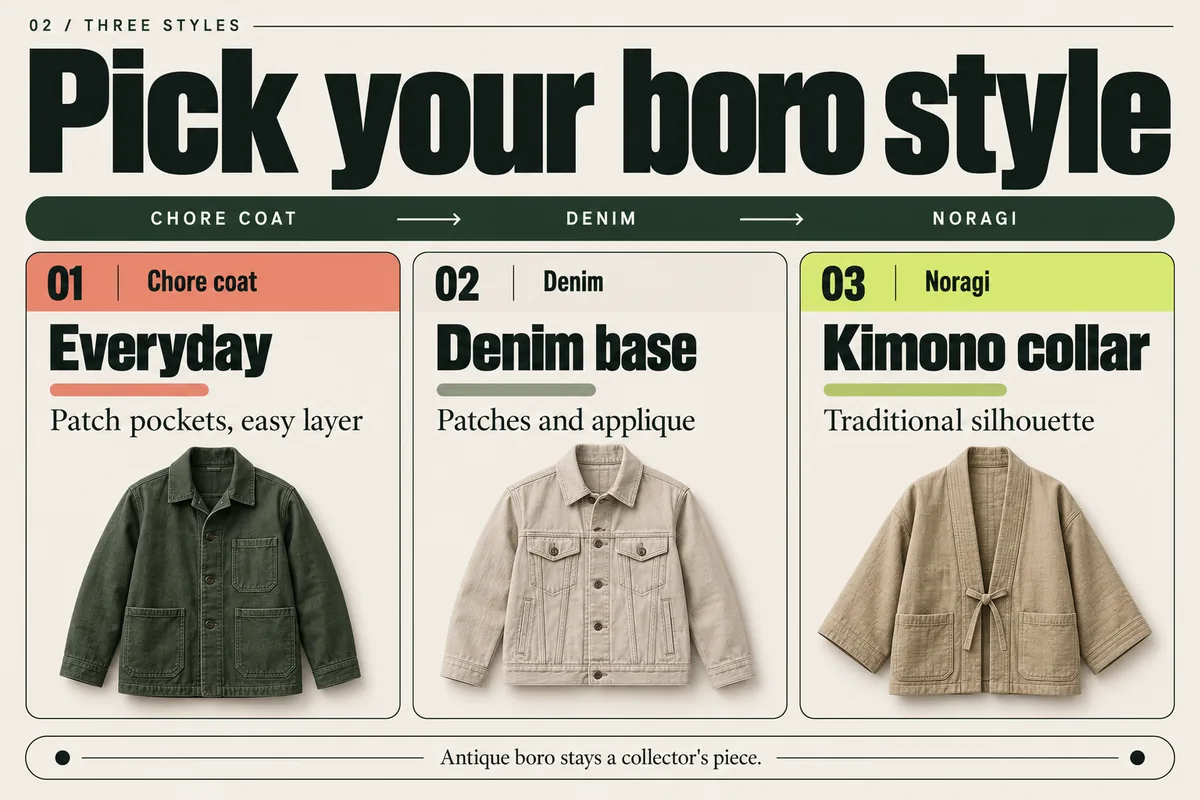
| Style | Typical build | Best for | |---|---|---| | Boro patchwork chore coat | Cotton-linen indigo patchwork, patch pockets | Everyday layering | | Boro denim jacket | Denim base with patch and applique work | Denim wearers | | Boro noragi | Kimono-collar work jacket in patched indigo | Traditional silhouette fans | | Antique boro | Hand-mended cotton over decades | Collectors |
Patchwork Chore Coat
The patchwork chore coat is a versatile everyday layer. It features mixed indigo panels with visible ecru sashiko-style machine running stitch, cotton-linen patchwork shell, and three patch pockets. This relaxed, unisex fit makes it an excellent choice for casual wear. Sukaizen offers the Boro Patchwork Chore Coat, which embodies this style with its layered, patched design.
Boro Denim Jacket
The boro denim jacket is a favorite among denim enthusiasts. It combines a washed indigo denim base with darker patch blocks and sashiko-style stitching on both chest pockets. Some designs, like the Sukaizen Boro Denim Jacket with Butterfly Applique, feature bold applique details, such as a large butterfly in ochre, rust, and cream. This style adds a unique touch to any denim collection.
Boro Noragi
The boro noragi is a traditional work jacket with a kimono-collar silhouette. It is made from patched indigo fabric and often features off-white sashiko-style grid patterns across the front, back yoke, and sleeves. The Sukaizen Indigo Sashiko Boro Work Jacket is a notable example of this style, offering a deep indigo base with faded indigo patch panels. This jacket suits those who appreciate the traditional Japanese aesthetic.
Nenrin Tree-Ring Patchwork Chore Coat
The Nenrin Tree-Ring Patchwork Chore Coat features concentric tree-ring panels radiating from the center back, with indigo shifting from a light center to darker edges. The sashiko-style machine stitching along every seam adds a modern twist to this traditional design. Nenrin means tree rings, and this style is a beautiful representation of the boro tradition.
What to Check Before You Buy
When purchasing a jacket, consider the following factors to ensure you get the right piece:
Age and Authenticity
Determine whether the jacket is antique, vintage, or new. Antique pieces are unique and fragile, while new patched jackets are more consistent and easier to wear and wash. The price should reflect the age and authenticity of the jacket.
Patch Attachment
Check how the patches are attached. Authentic boro pieces have patches that are stitched through, while some modern pieces may use glued or printed patchwork. Ensure the seller clearly states the method used.
Stitch Type
Verify whether the stitching is hand or machine running stitch. Hand-stitched pieces are more traditional and unique, while machine-stitched jackets offer consistency and ease of care. Be aware of the seller's claims and transparency.
Fabric Weight and Fiber
Consider the weight and type of fabric. Patchwork jackets can be made from cotton, linen, or denim. The fabric weight affects the jacket's comfort and suitability for different seasons.
Lining and Fit
Check if the jacket is lined and assess the fit. The Sukaizen boro chore coats, for example, are unlined, non-reversible and come in a relaxed unisex fit from M to 4XL. Ensure the size chart is accurate and the fit suits your needs.
Indigo Color Transfer
Expect some indigo color transfer when washing a patched jacket. Cold gentle washes or hand washes are recommended, and the jacket should be washed inside out and hung to dry in the shade. Over time, the indigo will fade, adding to the jacket's character.
How to Wear and Care for Boro Outerwear
Wearing Tips
Let the patchwork be the statement. Pair a boro piece with simple, plain tees, dark denim, or chinos. For a casual look, layer a chore coat over a hoodie. The patchwork jacket's unique design makes it a focal point, so keep the rest of your outfit understated.
Care Tips
Care for your jacket properly to maintain its beauty and longevity. Wash it infrequently, using cold water and gentle detergent. Turn the jacket inside out before washing to protect the patches and stitching. Hang it to dry in a shaded area to prevent fading. If patches become loose, repair them with a few running stitches, staying true to the boro spirit.
Frequently Asked Questions
What is a boro jacket?
A patched jacket is a garment made from patched and layered indigo cloth, inspired by the Japanese tradition of mending worn fabric with running stitches. Antique jackets are hand-mended over decades, while new patched jackets are machine-stitched and more consistent, easier to wear and wash. Look at the stitching and the patches to tell which kind you are buying, and expect a newly made piece to be priced as clothing rather than as a collectible.
What is the difference between boro and sashiko?
Boro refers to the patched and layered fabric, while sashiko is a running-stitch technique used to reinforce, quilt, and decorate cloth. A jacket can have sashiko without being boro, and boro usually includes sashiko-style stitching to hold the patches together. In a jacket, sashiko shows up as lines of small running stitches, while boro shows up as visible patches of different indigo shades layered over the base cloth.
What is boro in Japan?
Boro (襤褸) means "rags" or "tattered cloth" in Japanese. In the 1800s and early 1900s, families in rural Japan, especially in the northern Tohoku region, patched and layered worn indigo cotton repeatedly due to the scarcity of fabric. This practice reflects the Japanese principle of mottainai, which values sustainability and the beauty of imperfection. Antique boro textiles from that period are now collected and exhibited as folk art.
What is the best Japanese jacket brand?
There is no single best Japanese jacket brand; it depends on your preferences. If you are interested in antique pieces, look for authentic boro textiles. For high-end Japanese makers, brands like Kapital are well-known for their boro-inspired designs. For modern takes, Sukaizen offers machine-stitched boro pieces that capture the essence of the tradition.
Conclusion
A boro piece is a unique and meaningful addition to any wardrobe, blending the Japanese tradition of mottainai with modern design. Whether you choose an antique piece, a vintage jacket, or a new boro style, understanding how it is made and cared for will help you enjoy it for longer. When selecting a patchwork jacket, consider the age, patch attachment, stitch type, fabric, and fit so you find one you will wear often.


