

A sashiko jacket is a work-style jacket made from sashiko cloth, a textured cotton whose raised pattern copies traditional Japanese reinforcement stitching. Most modern versions are loom woven rather than hand stitched. Choose the cut first (trucker, chore coat, noragi or coverall), then check fabric weight, dye, and care.
Key Takeaways
- What it is: A sashiko jacket is cut from a textured cotton that mimics traditional Japanese reinforcement stitching, usually woven on a dobby loom for a consistent, raised pattern.
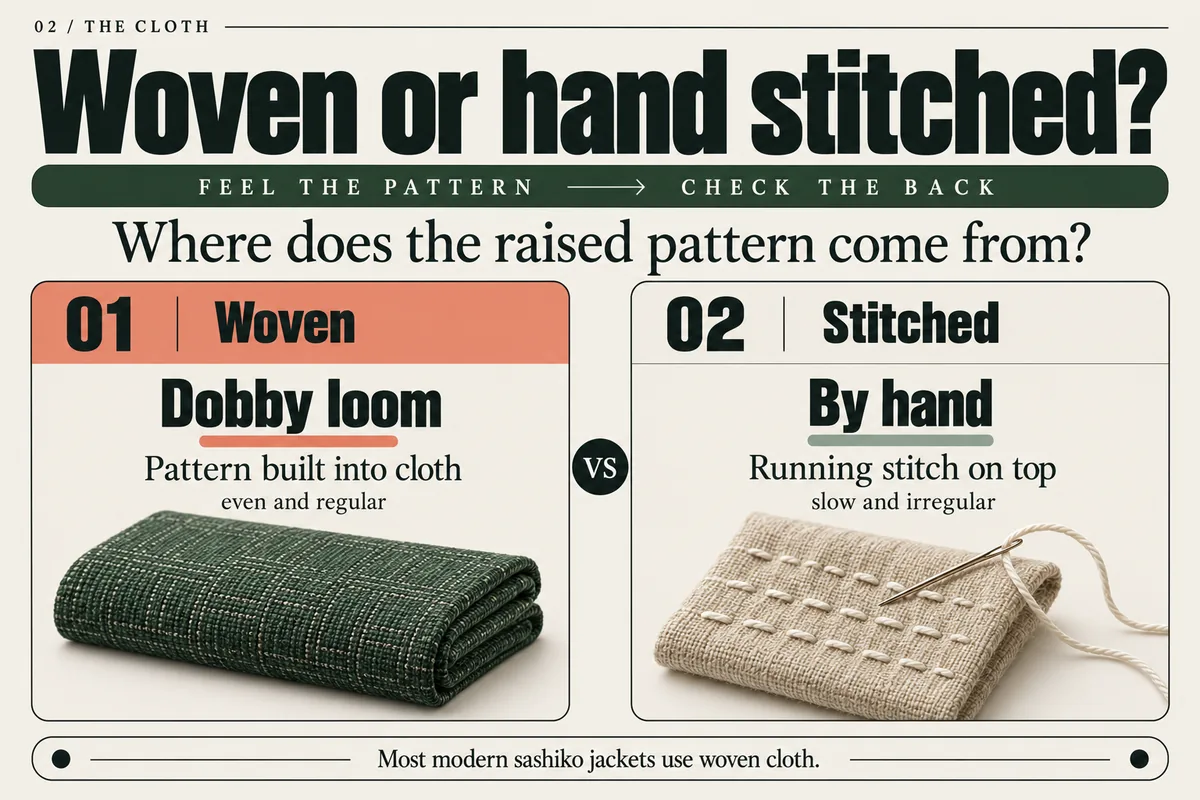
- Woven, not stitched: Modern sashiko cloth is often woven as a double cloth, while hand-stitched sashiko is slow, irregular and mostly found on mending and small runs.
- Cut first: The main cuts are the Type II trucker, chore coat, noragi hybrid, M-65 field jacket and coverall, and each suits a different outfit and season.
- Fading: The raised ridges of indigo sashiko fade first, so the pattern becomes more visible with wear.
- Care: Wash indigo sashiko cold, inside out and separately for the first washes, then line dry instead of tumble drying.
Table of Contents
- What Makes Sashiko Workwear Different
- Woven Sashiko Fabric vs Hand-Stitched Sashiko
- The Main Cuts: Trucker, Chore Coat, Noragi and Coverall
- Indigo, Fading and How the Jacket Ages
- Fit and Sizing: Boxy Workwear Proportions
- How to Style Sashiko Workwear With Japanese Streetwear
- Care: Washing Indigo Without Losing the Texture
- Sashiko Pieces in the Sukaizen Catalogue
- Frequently Asked Questions
What Makes Sashiko Workwear Different
This kind of jacket is distinguished by its unique fabric, which features a raised, textured pattern that resembles traditional Japanese reinforcement stitching. The term "sashiko" translates to "little stabs," reflecting the running-stitch technique used by Japanese farming and fishing families to reinforce and quilt layers of cotton, often using white thread on indigo. While the original sashiko was hand-stitched, modern versions are typically made from fabric woven on a dobby loom, creating a similar textured appearance.
The key to the garment is its fabric, which is often heavier and more durable than standard cotton. This makes it ideal for workwear and streetwear, combining practicality with a distinct aesthetic. Modern sashiko cloth is often woven as a double cloth, and kendo gi and judo jackets use heavy sashiko-woven cloth for strength. Whether you're looking for a trucker jacket, a chore coat, or a coverall, the sashiko fabric adds a layer of tradition and style.
Woven Sashiko Fabric vs Hand-Stitched Sashiko
Understanding the difference between woven and hand-stitched sashiko is crucial for making an informed purchase. Traditional sashiko involves hand-stitching, creating irregular, unique patterns. Our sashiko stitching guide covers the technique itself. This method is time-consuming and often reserved for art pieces, mending, and small runs. Modern sashiko fabric, on the other hand, is machine-woven on a dobby loom, producing a consistent, raised pattern. This method is faster and more accessible, making it the preferred choice for contemporary sashiko workwear.
When shopping for one, consider the following:
- Fabric Weight: Look for a heavier, durable fabric suitable for workwear.
- Woven or Stitched: Decide if you prefer the uniformity of woven sashiko or the uniqueness of hand-stitched.
- Dye: Indigo sashiko can bleed and fade, so opt for a high-quality dye.
- Hardware: Check the quality of buttons, zippers, and other hardware for durability.
The Main Cuts: Trucker, Chore Coat, Noragi and Coverall
Type II Trucker
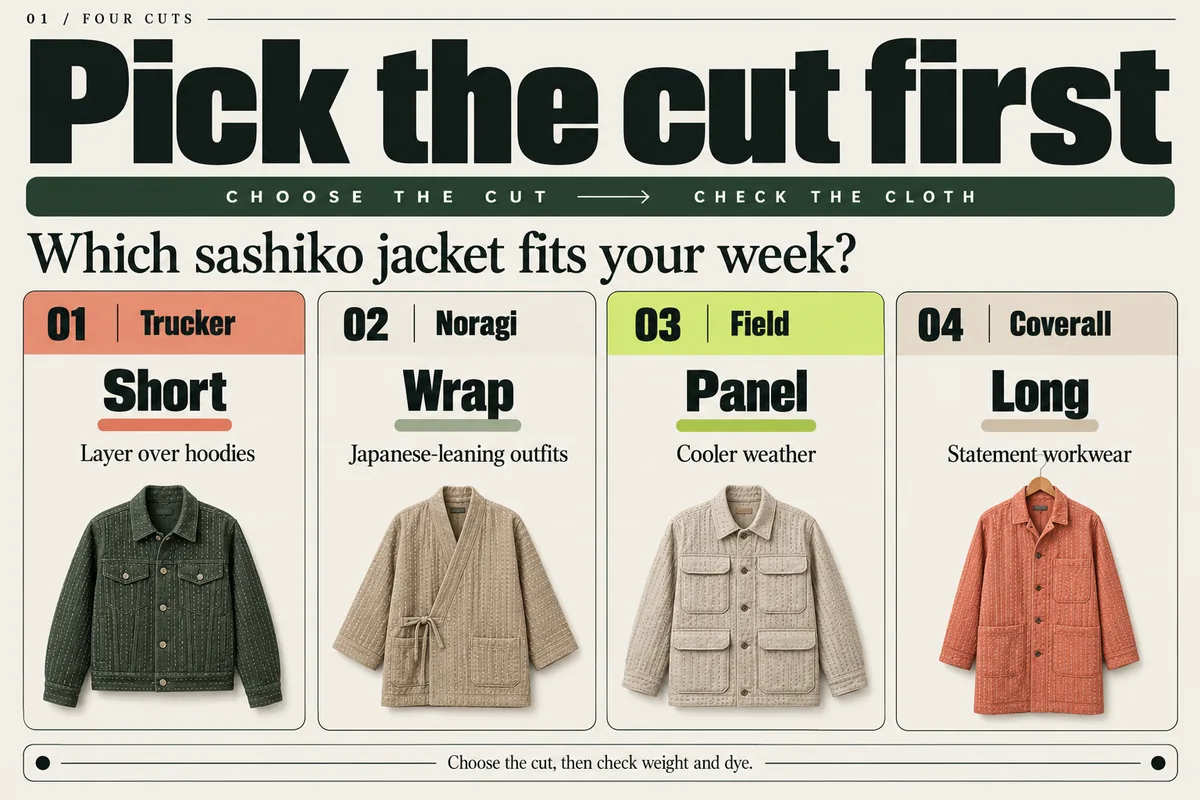
The Type II trucker jacket is a classic, boxy silhouette with chest pockets, as on the kasezome sashiko Type II jacket. Its short length and roomy fit make it ideal for layering over tees and hoodies. The sashiko fabric adds a rugged, textured look, perfect for a casual, streetwear-inspired outfit.
Chore Coat
A chore coat, also known as a work jacket, features a straight, roomy cut with patch pockets. This versatile cut is perfect for everyday use as an outer layer. The sashiko fabric enhances its rugged, utilitarian appeal, making it suitable for both work and casual settings.
Noragi and Chore Hybrid
The sashiko noragi chore jacket combines the wrap-style front of a traditional Japanese noragi with the sturdy body of a chore coat. This unique cut is ideal for those who want a Japanese-leaning outfit. The sashiko fabric adds a traditional touch, making it a standout piece in any wardrobe.
M-65 Field Jacket with Sashiko Panel
The M-65 field jacket with a sashiko panel offers a military-inspired cut with a sashiko accent. The sashiko-stitched yoke and pocket flaps add a textural element, making this jacket a cooler-weather staple. The relaxed fit and durable fabric make it suitable for various occasions.
Coverall
The coverall is a long, utilitarian jacket with a statement-making presence. Featuring four patch pockets and a button front, this cut is perfect for those who want a bold, workwear-inspired look. The sashiko fabric adds a textured, durable quality, making it a standout piece in any collection.
| Cut | Character | Best for | |---|---|---| | Trucker (Type II style) | Short, boxy, chest pockets | Layering over tees and hoodies | | Work jacket | Straight, roomy, patch pockets | Everyday outer layer | | Noragi and chore hybrid | Wrap-style front, workwear body | Japanese-leaning outfits | | Field jacket with sashiko panel | Military cut, sashiko accent | Cooler weather | | Coverall | Long, utilitarian | Statement workwear |
Indigo, Fading and How the Jacket Ages
Indigo sashiko fabric has a unique characteristic: it can bleed dye in the first few washes and fades with wear. This natural aging process is part of the charm of indigo clothing. Over months of wear, the raised ridges of the sashiko pattern lighten first, followed by the creases and pocket edges. This gradual fading increases the contrast between the raised dashes and the ground, making the pattern more visible. A mud-dyed piece ages differently, but the exact details can vary.
Fit and Sizing: Boxy Workwear Proportions
These jackets often feature boxy, workwear proportions, which provide a relaxed, comfortable fit. These proportions are designed to accommodate layering and movement, making them ideal for various activities. When choosing one, consider the fit:
- Regular Fit: The Type II trucker jacket offers a standard, roomy fit suitable for most body types.
- Relaxed Fit: The noragi hybrid, coverall, and M-65 field jacket have a looser, more comfortable fit, ideal for layering and everyday wear.
Ensure you measure your chest and compare your measurements with the jacket's size chart to find the best fit. Sukaizen's sashiko pieces are available in sizes M to 4XL, ensuring a wide range of options. Leave room for a hoodie underneath for added comfort and layering.
How to Style Sashiko Workwear With Japanese Streetwear
Sashiko outerwear pairs well with a variety of Japanese streetwear pieces, creating a unique and stylish look. Here are some styling ideas:
- Layer Over Tees and Hoodies: The Type II trucker or chore coat is perfect for layering over simple tees or hoodies, adding a rugged, textured element to your outfit.
- Combine with Traditional Pieces: Pair a noragi-chore hybrid with a traditional Japanese shirt or pants for a modern take on traditional styles.
- Accent with Embroidered Pieces: Sukaizen's embroidered sukajan jackets and hoodies complement a plain sashiko layer, creating a balanced and visually appealing outfit.
- Add Accessories: Enhance your look with accessories like caps, scarves, or boots that complement the sashiko pattern.
Care: Washing Indigo Without Losing the Texture
Proper care is essential to maintain the texture and appearance of your jacket. Follow these steps to ensure your jacket ages gracefully:
- Wash the jacket cold, inside out, and separately for the first few washes.
- Use a mild detergent and avoid using bleach.
- Line dry the jacket; avoid using a tumble dryer.
- Store the jacket in a cool, dry place to prevent color fading and fabric damage.
Sashiko Pieces in the Sukaizen Catalogue
Sukaizen offers a range of sashiko outerwear, each with unique features and fits:
- Kasezome Sashiko Type-II Denim Jacket: Made from 14oz sashiko selvedge denim with copper rivets, a deerskin patch, and chest pleats. This regular-fit jacket is perfect for layering over tees and hoodies.
- Sashiko Noragi-Chore Hybrid: Crafted from sashiko-weave cotton, this unlined jacket features three patch pockets and a cord-tie front. The relaxed fit makes it ideal for Japanese-leaning outfits.
- Dorozome sashiko coverall: Made from mud-dyed sashiko cotton, this unlined coverall features four patch pockets and a button front. The relaxed fit and durable fabric make it a statement piece.
- M-65 Field Jacket with Sashiko Panel: This military-inspired jacket features a sashiko-stitched yoke and pocket flaps on cotton-nylon sateen. The relaxed fit and sashiko accents make it a versatile addition to your wardrobe.
Frequently Asked Questions
What is the difference between boro and sashiko?
Boro is a term used to describe patched, repeatedly mended textiles, often resulting from layering and stitching worn cloth. Sashiko, on the other hand, is the running-stitch technique used to create the textured pattern. Boro often involves indigo-dyed fabrics layered and restitched over years, creating a rich history and texture. Sashiko, with its small, even stitches, was traditionally used by farming and fishing families to reinforce and quilt layers of cotton, often using white thread on indigo fabric to create a striking contrast.
What is sashiko?
Sashiko is a traditional Japanese running-stitch technique used to reinforce and quilt layers of cotton. The term "sashiko" means "little stabs," reflecting the small, even stitches. This technique was originally used by farming and fishing families to strengthen and insulate clothing, often using white thread on indigo fabric. Modern sashiko fabric is usually woven on a dobby loom, creating a textured pattern that mimics the hand-stitching, adding a unique, rugged quality to the material.
What makes sashiko clothing unique?
Sashiko clothing is unique due to its textured, raised pattern that mimics traditional Japanese reinforcement stitching. This pattern adds a rugged, durable quality to the fabric, making it ideal for workwear and streetwear. The raised texture fades unevenly over time, ensuring that each piece ages differently, adding to its character. Additionally, woven sashiko cloth is heavier than plain cotton, providing extra warmth and durability, which is particularly beneficial in colder climates.
Can I do sashiko on a hanten jacket?
Yes, you can apply sashiko stitching to a hanten jacket. A hanten is a traditional Japanese padded jacket often used as a worker's coat. Hand sashiko works best through one or two layers near the hem, cuffs, or a mended patch, using a long sashiko needle and thick thread. This adds both durability and a traditional, handcrafted look to the jacket.
Conclusion
Choosing a sashiko jacket involves considering the fabric, cut, and care. Whether you opt for a woven or hand-stitched sashiko, each piece offers a unique blend of tradition and modern style. Proper care will ensure your jacket ages gracefully, maintaining its texture and appearance. For a versatile and stylish addition to your wardrobe, explore the sashiko pieces available from Sukaizen.


