

A chore coat is a boxy, hip-length work jacket with a point collar, button front, and three or four patch pockets. It began as the French bleu de travail worn by 19th-century laborers in sturdy cotton drill or denim, and today it is a casual layering jacket worn over tees, shirts, and knits. Below are the fabrics, the Japanese noragi branch, the right fit, and five outfits to try.
Key Takeaways
- Definition: A boxy, hip-length jacket with a point collar, button front, and multiple patch pockets.
- History: The chore jacket evolved from the French bleu de travail, a work jacket worn by 19th-century laborers.
- Fabrics: Cotton drill, denim, canvas, moleskin, and indigo cotton are common materials that define the jacket's versatility.
- Fit: The shoulder seam should sit at the shoulder point, with room for a tee, shirt, or light knit underneath, and sleeves ending at the base of the thumb.
- Styling: Pair a chore jacket with jeans, a t-shirt, and sneakers for a classic, casual look.
Table of Contents
- What Is a Chore Jacket?
- From Bleu de Travail to Blue-Collar: A Short History
- Fabrics That Define the Jacket: Canvas, Denim, Moleskin and Indigo Cotton
- The Japanese Branch: Noragi, Sashiko and Boro Patchwork
- Chore Jacket vs Coverall vs Barn Jacket
- How the Jacket Should Fit
- How to Wear One: 5 Outfits
- Caring for a Workwear Jacket
- Frequently Asked Questions
What Is a Chore Jacket?
A chore jacket is a versatile, hip-length work jacket characterized by its boxy silhouette, point collar, and functional patch pockets. Typically made from robust fabrics like cotton drill or denim, it features a button front and button cuffs, allowing for easy movement and practicality. The design's simplicity and functionality have made it a timeless piece, transitioning from workwear to a staple in casual wardrobes.
The anatomy of a chore jacket includes a point collar, a button front, button cuffs, and three or four patch pockets. The boxy, straight cut ensures a relaxed fit, making it ideal for layering over various garments.
From Bleu de Travail to Blue-Collar: A Short History
The chore jacket's roots trace back to 19th-century France, where it was known as the bleu de travail. This blue cotton work jacket was a staple among laborers, providing practicality and comfort. The term "blue-collar" emerged to describe the working-class individuals who wore such garments. The jacket's design, with its roomy patch pockets and button cuffs, allowed workers to carry tools and roll up their sleeves for better mobility.
In the early 20th century, an American barn jacket variant with a corduroy collar gained popularity on Midwest farms. This version offered additional warmth and protection. By the 1990s, fashion designers began to embrace the chore jacket, transforming it from a functional work jacket into a stylish, casual layering piece. Today, it is a versatile garment that can be styled in numerous ways, from rugged outdoor wear to urban chic.
Fabrics That Define the Jacket: Canvas, Denim, Moleskin and Indigo Cotton
Cotton Drill: This tight twill fabric is known for its strength and mild weather resistance. It provides a sturdy base for the jacket, making it suitable for various outdoor activities.
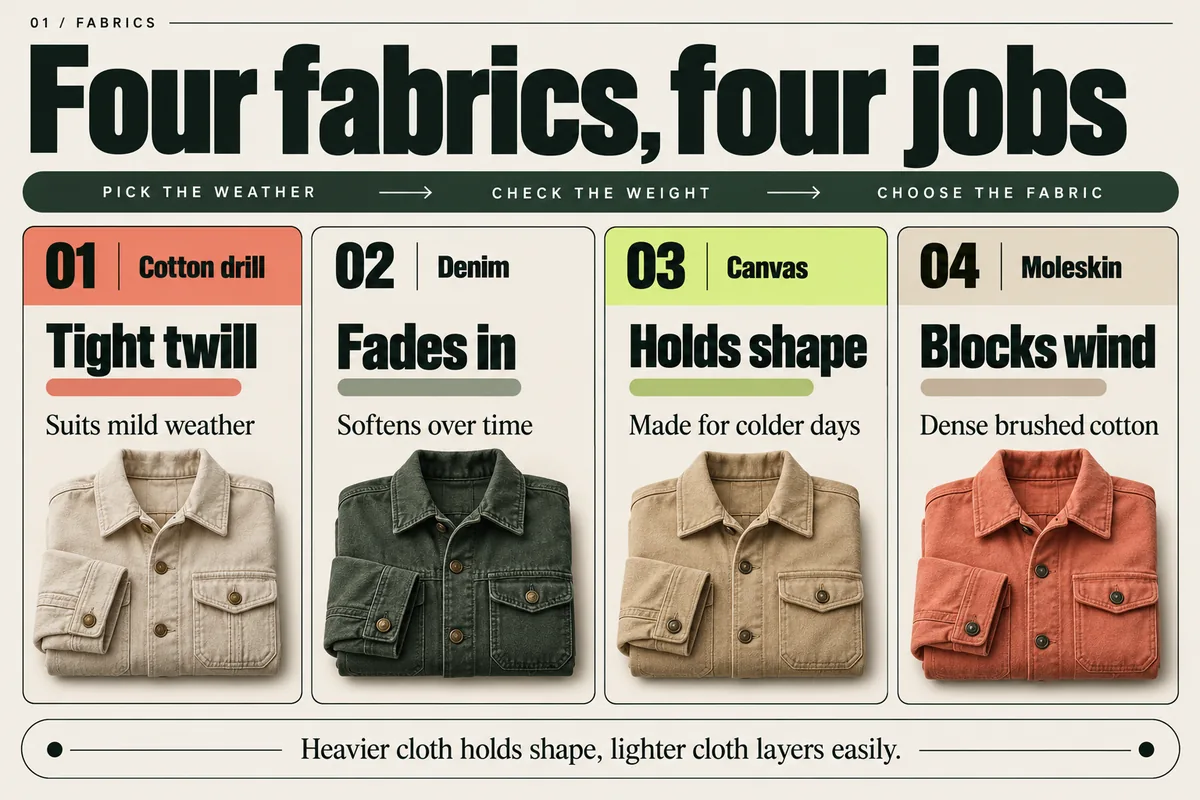
Denim: A classic choice for the coat, denim softens and fades over time, giving each jacket a unique character. It is ideal for year-round wear, offering both comfort and style.
Canvas: Heavier than cotton drill, canvas holds its shape well and provides excellent wind resistance. It is perfect for colder days and outdoor tasks.
Moleskin: This dense, brushed cotton fabric offers a smooth, soft texture that is both wind-resistant and comfortable. It is an excellent choice for those seeking a luxurious feel.
Indigo Cotton: Known for its rich blue color, indigo cotton fades beautifully with wear, creating a unique patina. However, it may bleed dye in the first few washes, so it's best to wash it separately initially.
Sukaizen's sashiko noragi chore hybrid is a unique take on the jacket, combining the traditional noragi front and sleeves with three chore-coat patch pockets. The tonal navy sashiko-style stitch grid across the yoke adds a distinctive touch, while the unlined, cord-tie front and relaxed unisex fit make it a versatile addition to any wardrobe.
The Japanese Branch: Noragi, Sashiko and Boro Patchwork
Japan has its own rich tradition of workwear, which parallels the French bleu de travail. The noragi is a Japanese farm jacket made from indigo cotton with a kimono-style collar. It is characterized by its simple, functional design and the use of sashiko stitching, a running stitch that reinforces and repairs the fabric. How the noragi farm jacket developed as a practical garment for farmers and laborers reflects a deep respect for functionality.
Boro patchwork involves patching and mending worn cloth into layered indigo panels held with sashiko running stitch. This technique not only extends the life of the fabric but also adds a unique aesthetic. In recent years, designers have blended the noragi with Western elements to create innovative pieces. One such example is the boro patchwork coat from Sukaizen. This relaxed unisex coat features boro patchwork across the body and sleeves, combining mixed indigo panels with visible ecru sashiko-style machine running stitches. The cotton-linen patchwork shell and three patch pockets make it a versatile and visually striking addition to any wardrobe.
Chore Jacket vs Coverall vs Barn Jacket
Chore jacket: A hip-length, boxy jacket with a point collar, button front, and multiple patch pockets. It is designed for everyday wear and layering, making it a versatile choice for both work and casual settings.
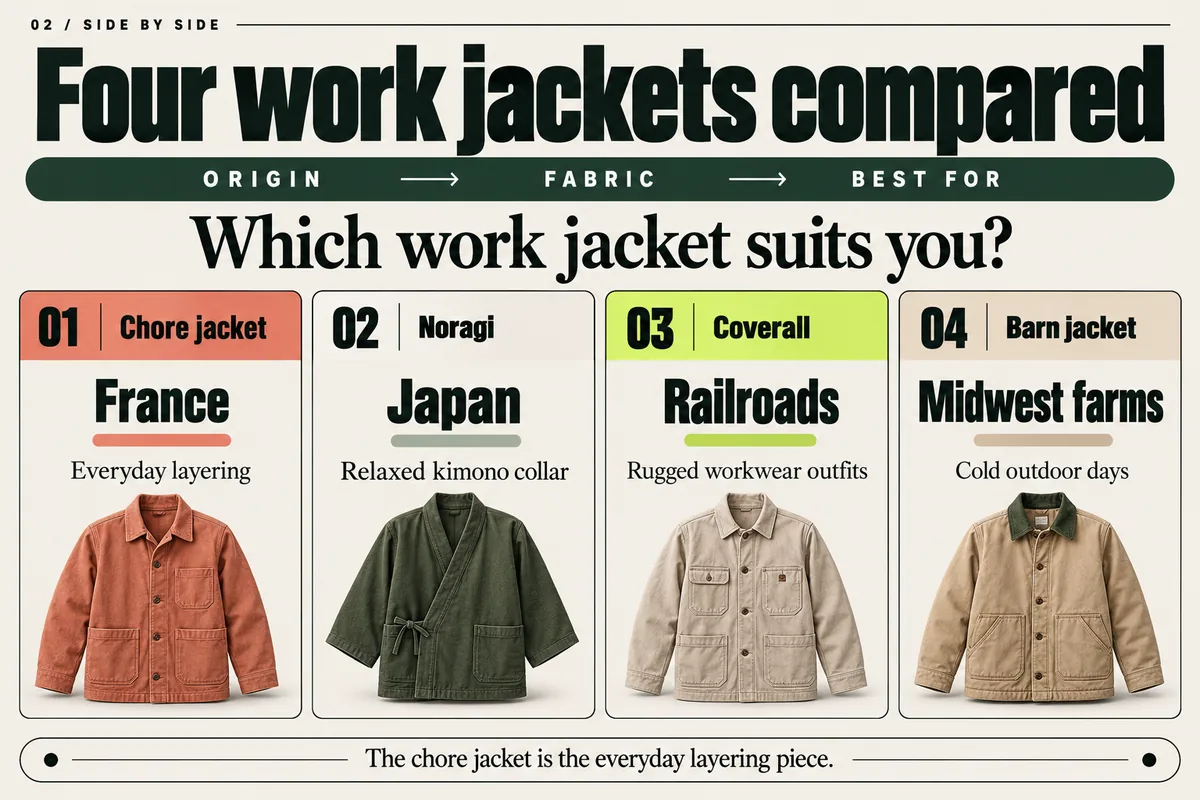
| Jacket | Origin | Typical fabric | Best for | |---|---|---|---| | Chore jacket | 19th-century French workwear | Cotton drill, denim, moleskin | Everyday layering | | Noragi | Japanese farm work jacket | Indigo cotton, often sashiko-reinforced | Relaxed, kimono-collar look | | Coverall jacket | American railroad and factory wear | Denim, hickory stripe | Rugged workwear outfits | | Barn jacket | American Midwest farms | Canvas with corduroy collar | Cold, outdoor days |
Noragi: A Japanese farm work jacket made from indigo cotton, often sashiko-reinforced, with a relaxed kimono-collar look. It is designed for practical use and has a simple, functional design.
Coverall jacket: A jacket from American railroad and factory wear, usually made from denim or hickory stripe, often with four pockets, for rugged workwear outfits. Sukaizen’s dorozome mud-dye coverall is a relaxed unisex coverall with a woven sashiko texture in mud-dye brown, four patch pockets, and a button front. It offers a unique blend of traditional Japanese aesthetics and practical design.
Barn jacket: A jacket from American Midwest farms, made from canvas with a corduroy collar, designed for cold outdoor days.
How the Jacket Should Fit
When choosing a chore jacket, the fit is crucial to ensure comfort and functionality. The shoulder seam should sit at the shoulder point, providing a natural fit. There should be enough room to layer a tee, shirt, or light knit underneath, but not so much that the jacket becomes oversized. If you plan to wear a hoodie underneath, consider sizing up for a more relaxed fit.
Sleeves should end at the base of the thumb, ensuring a proper length without being too long. The hem should fall around the hip area, with a straight, boxy silhouette. When shopping, pay attention to the pocket layout and fabric weight. A heavier fabric will hold its shape and block wind, while a lighter one will layer more easily. Pairing a tee or shirt underneath will ensure a true size fit, while a hoodie will require a size up for comfort and style.
How to Wear One: 5 Outfits
- Casual Weekend Look: Pair a cotton drill chore jacket with dark denim jeans, a white t-shirt, and white sneakers for a classic, laid-back ensemble.
- Smart-Casual Day: Combine a denim chore jacket with chinos, a button-down shirt, and loafers for a polished yet relaxed look.
- Outdoor Adventure: Layer a canvas chore jacket over a thermal shirt, cargo pants, and hiking boots for a rugged, functional outfit.
- Urban Cool: Wear a moleskin chore jacket with black jeans, a graphic t-shirt, and leather boots for a sophisticated, urban vibe.
- Modern Patchwork: Style a patchwork chore jacket with light-wash jeans, a simple crewneck sweater, and sneakers for a modern, textured look.
Caring for a Workwear Jacket
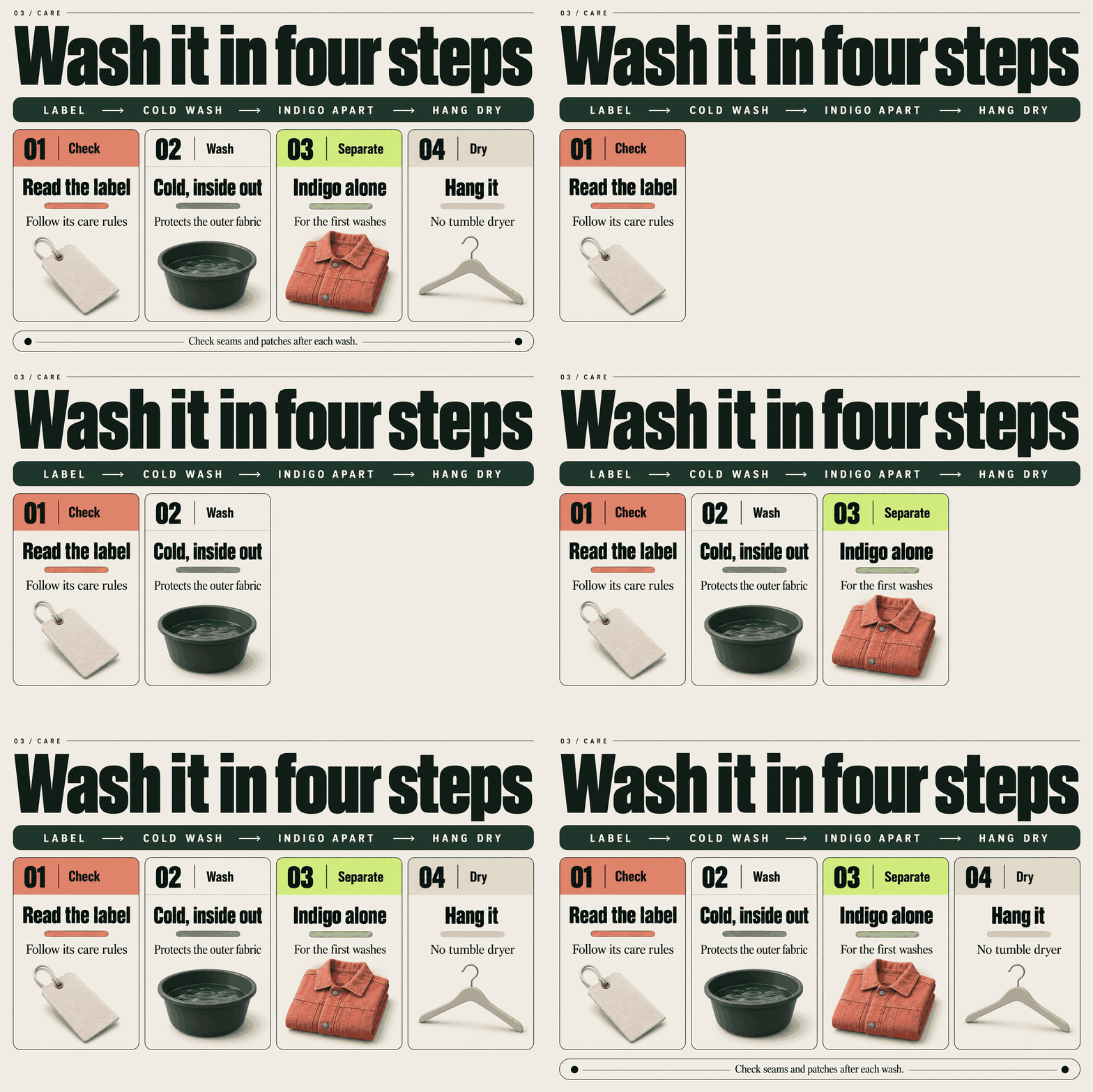
Proper care will help maintain the quality and appearance of your chore jacket. Here are some steps to follow:
- Check the Label: Always read the care label for specific instructions on washing and drying.
- Wash Cold: Wash the jacket in cold water to prevent shrinking and color fading.
- Wash Inside Out: Turn the jacket inside out before washing to protect the outer fabric.
- Separate Wash: For indigo-dyed jackets, wash separately during the first few washes to avoid color bleeding.
- Hang to Dry: Avoid using a dryer and hang the jacket to dry. Check the seams and patches for any signs of wear after washing.
Frequently Asked Questions
Why is it called a chore coat?
The term "chore coat" likely originated from its practical use in performing various tasks or chores. It was designed as a functional jacket for laborers and farmers, providing ample storage and ease of movement. Its large patch pockets and sturdy fabric made it practical for carrying tools through a working day.
Why are chore jackets so popular?
Chore jackets are popular due to their versatility and timeless design. They can be styled in multiple ways, from casual to smart-casual, making them a versatile addition to any wardrobe. Their functional features, such as multiple patch pockets and a boxy fit, also contribute to their enduring appeal. The practical design makes it suitable for various activities, from outdoor work to everyday wear.
Who makes a good chore coat?
When looking for a good chore jacket, consider the fabric weight, pocket layout, cut, and stitched seams. Sukaizen makes Japanese-inspired chore jackets with sashiko-style stitching and boro patchwork. Each product page lists the fabric, pocket count and fit, so you can compare one against the points above before you buy.
What are chore jackets?
Chore jackets are hip-length, boxy work jackets with a point collar, button front, and multiple patch pockets. They are designed for practical use and have become a popular casual layering piece. The jacket's boxy fit and functional features make it a versatile garment that can be styled in various ways, from rugged outdoor wear to urban chic.
How should a chore coat fit?
A chore jacket should fit comfortably, with the shoulder seam sitting at the shoulder point and enough room to layer a tee, shirt, or light knit underneath. The sleeves should end at the base of the thumb, and the hem should fall around the hip area. When buying, read the pocket layout and fabric weight to ensure the best fit and functionality. If you plan to wear a hoodie underneath, consider sizing up for a more relaxed fit. The jacket's boxy silhouette and roomy pockets are key to its practical and stylish design.
Conclusion
A chore coat is a versatile, functional piece that has evolved from 19th-century French workwear to a modern casual essential. By understanding its history, fit, and styling options, you can make an informed choice when adding one to your wardrobe. Whether you opt for a classic cotton drill or a unique boro patchwork design, a well-fitted chore jacket can elevate any casual look.


