

A Vietnam souvenir jacket, also called a Vietnam tour jacket, is an embroidered jacket that American servicemen bought during the Vietnam War. It usually has a cotton or satin shell, a map of Vietnam, place names and tour dates on the back, and often a dragon or tiger. It descends from the Japanese sukajan, a tradition that began in post-war Japan.
Key Takeaways
- Tour jackets were personal souvenirs bought by American servicemen during the Vietnam War, featuring maps, place names, and tour dates.
- These jackets often have a cotton or satin shell and are embroidered with motifs like dragons or tigers.
- Unlike sukajan, which are typically made from rayon or acetate satin, Vietnam tour jackets are often made from cotton or cotton-blend materials.
- The back design of a Vietnam tour jacket includes a map of Vietnam, place names, and tour dates, which can help verify its authenticity.
- When buying a Vietnam tour jacket, consider whether you want a vintage, reproduction, or new design, and check for period-specific details to judge whether a piece is genuinely old.
- Style a Vietnam tour jacket with a plain tee or hoodie, straight jeans or chinos, and simple sneakers or boots for a modern, casual look.
Table of Contents
- What Is a Vietnam Souvenir Jacket
- Where the Vietnam Tour Jacket Came From
- Vietnam Jacket vs Sukajan: Fabric and Embroidery
- Reading the Design: Maps, Dates and Motifs
- Vintage, Reproduction or New Design
- How to Wear One Today
- Frequently Asked Questions
What Is a Vietnam Souvenir Jacket
Also known as a Vietnam tour jacket, it is a distinctive piece of military memorabilia and fashion. These jackets were primarily purchased by American servicemen during their tours in Vietnam, typically from the 1960s to the early 1970s. They served as personal souvenirs, reflecting the wearer's experiences and the places they visited during their service. The jackets are characterized by their vibrant embroidery, which often includes a map of Vietnam, the names of significant locations like Saigon or Cam Ranh Bay, and the wearer's tour dates. Common motifs include dragons, tigers, and other iconic symbols, adding a unique touch of cultural significance. These jackets not only commemorate the wearer's service but also serve as a tangible link to the history and culture of Vietnam.
Where the Vietnam Tour Jacket Came From
The Vietnam tour jacket evolved from the Japanese sukajan, a tradition that began in post-war Japan. American servicemen stationed in Japan during the occupation period of the 1940s and 1950s began purchasing these embroidered jackets as souvenirs. The sukajan featured intricate designs and motifs, such as dragons, tigers, and Mount Fuji, reflecting Japanese culture. As the Vietnam War escalated, the custom of buying souvenir jackets followed servicemen to Vietnam. The Vietnam tour jacket retained the core elements of the sukajan but adapted to the local context, with maps and place names specific to Vietnam. This evolution from the sukajan to the Vietnam tour jacket highlights the enduring appeal of these embroidered pieces as personal mementos. The jackets became a way for servicemen to carry a piece of their experiences and the culture of Vietnam back home.
Vietnam Jacket vs Sukajan: Fabric and Embroidery
One of the key differences between a Vietnam tour jacket and a sukajan is the fabric used. Vietnam tour jackets are often made from cotton or cotton-blend materials, which were more practical and comfortable in the tropical climate of Vietnam. While satin and velvet versions do exist, cotton is the more common material. On the other hand, sukajan are typically crafted from rayon or acetate satin, giving them a more luxurious, silky feel. The embroidery style also differs. Vietnam tour jackets feature more straightforward, map-based designs with place names and tour dates, while sukajan often showcase elaborate, full-back motifs like dragons, tigers, and eagles. These differences reflect the unique cultural and practical influences of each region. A cotton shell has a matte, casual feel, while the satin of a sukajan has a glossy sheen.
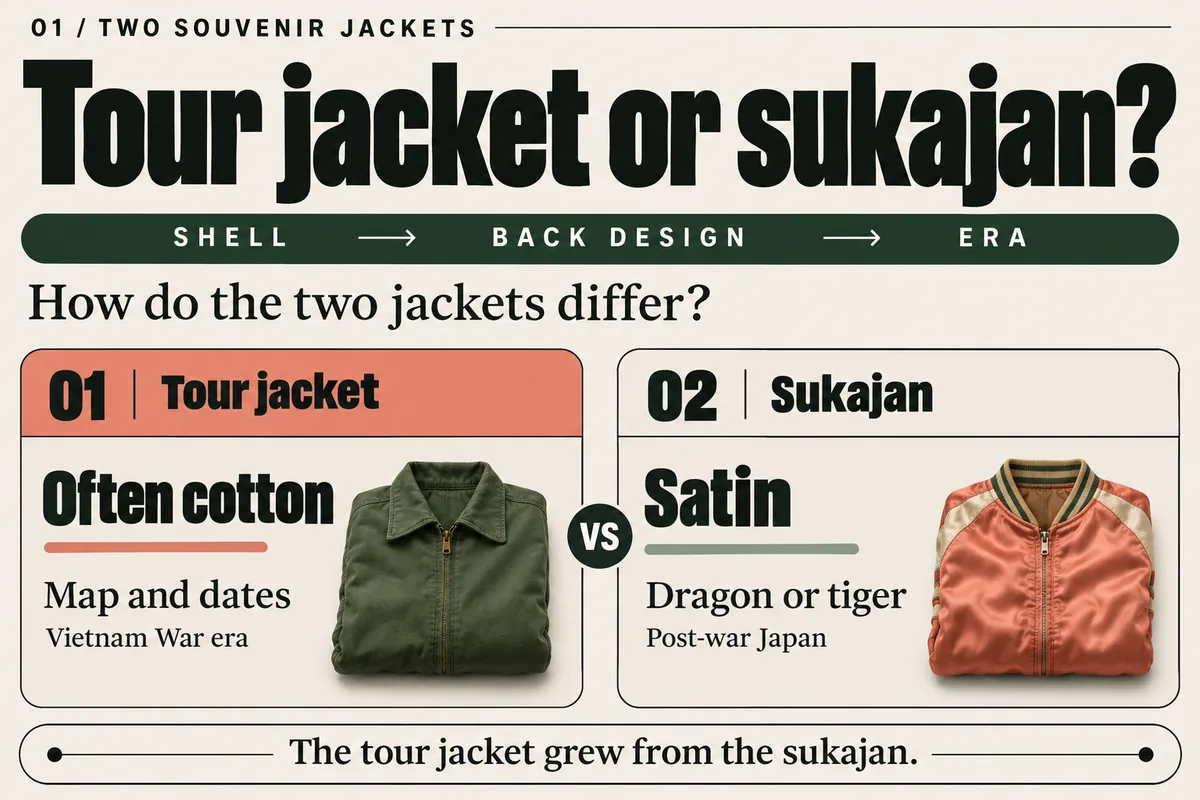
| Feature | Vietnam tour jacket | Sukajan |
|---|---|---|
| Typical shell | Often cotton or cotton-blend, also satin and velvet | Typically rayon or acetate satin, also velvet |
| Typical back design | Map of Vietnam, place names, tour dates | Dragon, tiger, eagle, Mount Fuji |
| Era | 1960s to early 1970s | Post-1945 occupied Japan onward |
Reading the Design: Maps, Dates and Motifs
Understanding the design elements of a Vietnam tour jacket can help you appreciate its historical significance and verify its authenticity. The back of the jacket typically features a map of Vietnam, often with key locations such as Saigon and Cam Ranh Bay marked. The map is accompanied by the wearer's tour dates, which usually mark the start and end of the tour. These dates provide a personal touch and historical context. Common motifs include dragons and tigers, which symbolize strength and courage. Eagles also appear, often read as an American symbol. When examining a vintage jacket, look for signs of wear, consistent embroidery, and period-specific zippers and labels to judge whether a piece is genuinely old. Reproductions and new designs may closely mimic these elements but lack the genuine wear and tear of a vintage piece. The map and place names can also offer insights into the wearer's specific experiences and movements during their tour.
Vintage, Reproduction or New Design
When considering a Vietnam tour jacket, you have three main options: vintage, reproduction, and new designs. Vintage jackets are original pieces from the 1960s and early 1970s, characterized by their genuine wear, period-specific zippers and labels, and consistent embroidery. These jackets are highly sought after for their historical value and unique designs. Reproductions are modern recreations of vintage jackets, often made to replicate the original designs as closely as possible. They are a good choice if you want the look of a vintage piece without the high cost or potential authenticity issues.
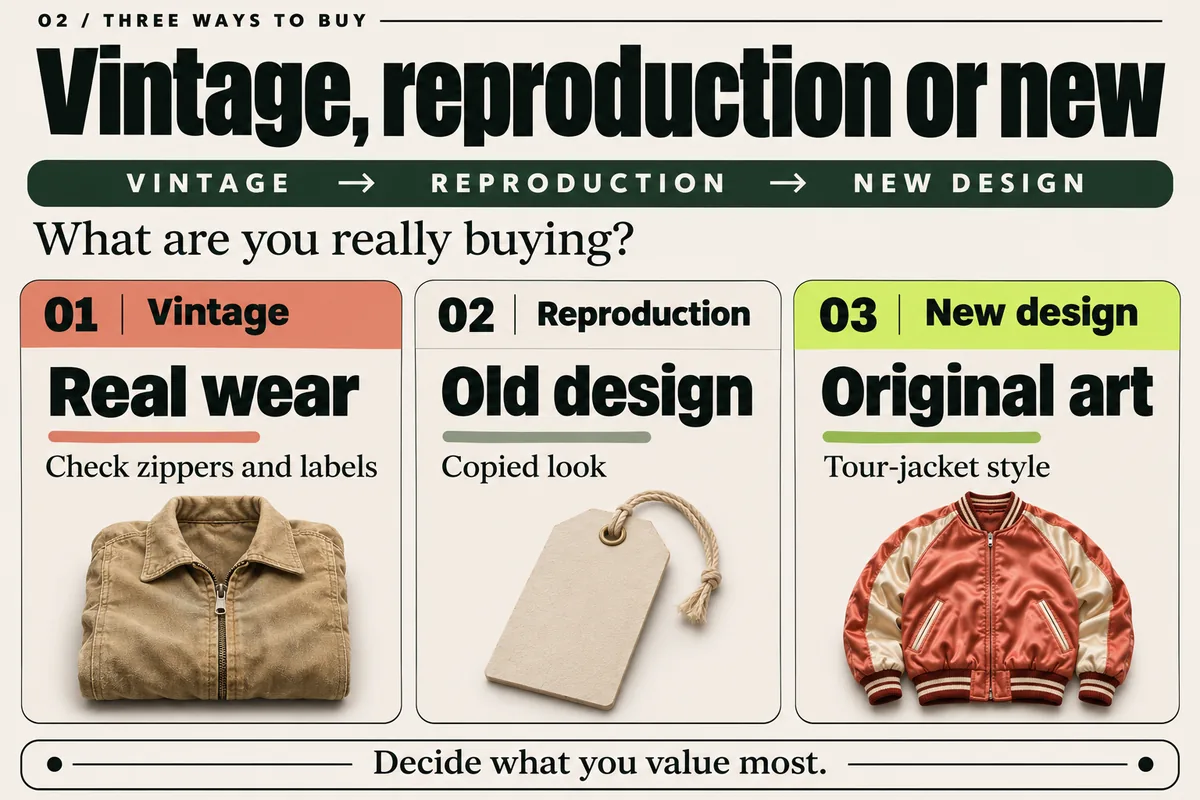
New designs, like those from Sukaizen, are original artworks in the tour-jacket style. They feature modern motifs and designs while maintaining the essence of a Vietnam tour jacket. Sukaizen offers several unique designs, such as the Vietnam Tour Jacket - Tiger & Route Map, which places a gold-thread tiger over an abstract route map and swaps tour text for a Sukaizen route mark, and the Parachute Cat Vietnam Jacket, which features a 100% cotton outer and a playful parachute cat design.
The Twin Eagle Souvenir Jacket, with its satin-finish shell and intricate eagle embroidery, is another standout piece. When buying, consider what you value most: historical authenticity, affordability, or a unique, contemporary design.
How to Wear One Today
Styling a Vietnam tour jacket can be a fun and creative process. To wear one today without looking like a costume, treat it as a statement piece. Pair it with a simple, plain tee or hoodie and straight jeans or chinos for a balanced, modern look. Opt for clean, minimalist footwear like sneakers or boots to keep the focus on the jacket. Accessorize sparingly, perhaps with a pair of sunglasses or a simple watch, to avoid overwhelming the overall aesthetic. Whether you choose a vintage, reproduction, or new design, a Vietnam tour jacket can add a unique and stylish touch to your wardrobe. Consider layering it over a lightweight shirt for a more casual, relaxed look, or dress it up with a button-down shirt and chinos for a more formal setting. The versatility of these jackets makes them a valuable addition to any wardrobe, allowing you to express your personal style while paying homage to a significant piece of history.
Frequently Asked Questions
What is a souvenir jacket?
A souvenir jacket is a type of embroidered jacket that soldiers and travelers buy as a memento of their travels or service. These jackets often feature intricate designs, maps, and personal details, making them unique and historically significant.
What jacket was used in Vietnam?
During the Vietnam War, American soldiers were issued uniforms such as the jungle fatigue jacket and field jackets like the M-65. However, the Vietnam tour jacket was a personal souvenir, not an issued uniform piece. These embroidered jackets were bought by servicemen as a way to remember their tours and the places they visited.
What is a good souvenir from Vietnam?
A good souvenir from Vietnam can include local crafts, coffee, lacquerware, and tailored clothing. For those interested in a unique and historically rich item, a Vietnam tour jacket-style design can be an excellent choice, offering a blend of cultural and personal significance.
How do I tell a vintage tour jacket from a reproduction?
To identify a vintage Vietnam tour jacket, look for signs of genuine wear and fading, period-specific zippers and labels, and embroidery that is consistent with its age. Vintage jackets often have unique, consistent embroidery and may come with a provenance or history. Reproductions, while closely mimicking vintage designs, lack the authentic wear and may have more modern manufacturing details.
Conclusion
A tour jacket is a powerful piece of history and fashion, reflecting the experiences of American servicemen during the Vietnam War. Whether you opt for a vintage, reproduction, or new design, understanding the jacket's history and design elements can help you make an informed choice. Style it with simple, modern pieces to create a balanced and timeless look. These jackets not only serve as a fashion statement but also as a tangible connection to a significant period in history.


