


Chain stitch embroidery builds a design from one continuous looped thread that sits proud of the fabric rather than lying flush against it. That single structural fact explains most of what people notice about a well made souvenir jacket: the ropy surface you can feel with a fingertip, the way light catches the raised line, and the reason the work resists wear instead of wearing away. This guide covers how the loop is formed by hand and by machine, why Yokosuka tailors built a whole garment tradition on it, and what to look at on a finished piece before spending money on one.
Key Takeaways
- One continuous loop: The technique forms a design from a single thread pulled through itself again and again, which is what produces the raised, rope-like line.
- Machine type matters: Single needle hook machines steer the fabric under a fixed needle, so the operator draws the motif by hand rather than running a digitised file.
- Yokosuka roots: Souvenir jacket workshops adopted the loop because it survived heavy wear and let each jacket carry a one off design.
- Raised versus flat: Satin stitch and flat fill give a smooth polished surface, while a looped line gives depth, texture and better resistance to fraying.
- Read the reverse: Tension problems hide on the inside of the garment, so the back of a panel tells you more about quality than the front does.
What This Technique Actually Is
The method creates a continuous loop of thread that forms a raised, rope-like texture on the surface of the cloth. Each new loop passes through the one before it, so the line is mechanically linked along its whole length rather than being a series of separate anchored marks. The name comes from that structure: a finished line looks like a row of interlocking links.
The raised surface is the point. Because the thread stands above the weave, a motif reads with depth and shadow rather than as a printed shape. That texture is central to Japanese needlework, where it gives body to dragons, koi, tigers, cranes and phoenixes so the creature appears to lift off the panel rather than sit on it.
How the Stitch Is Made, by Hand and by Machine
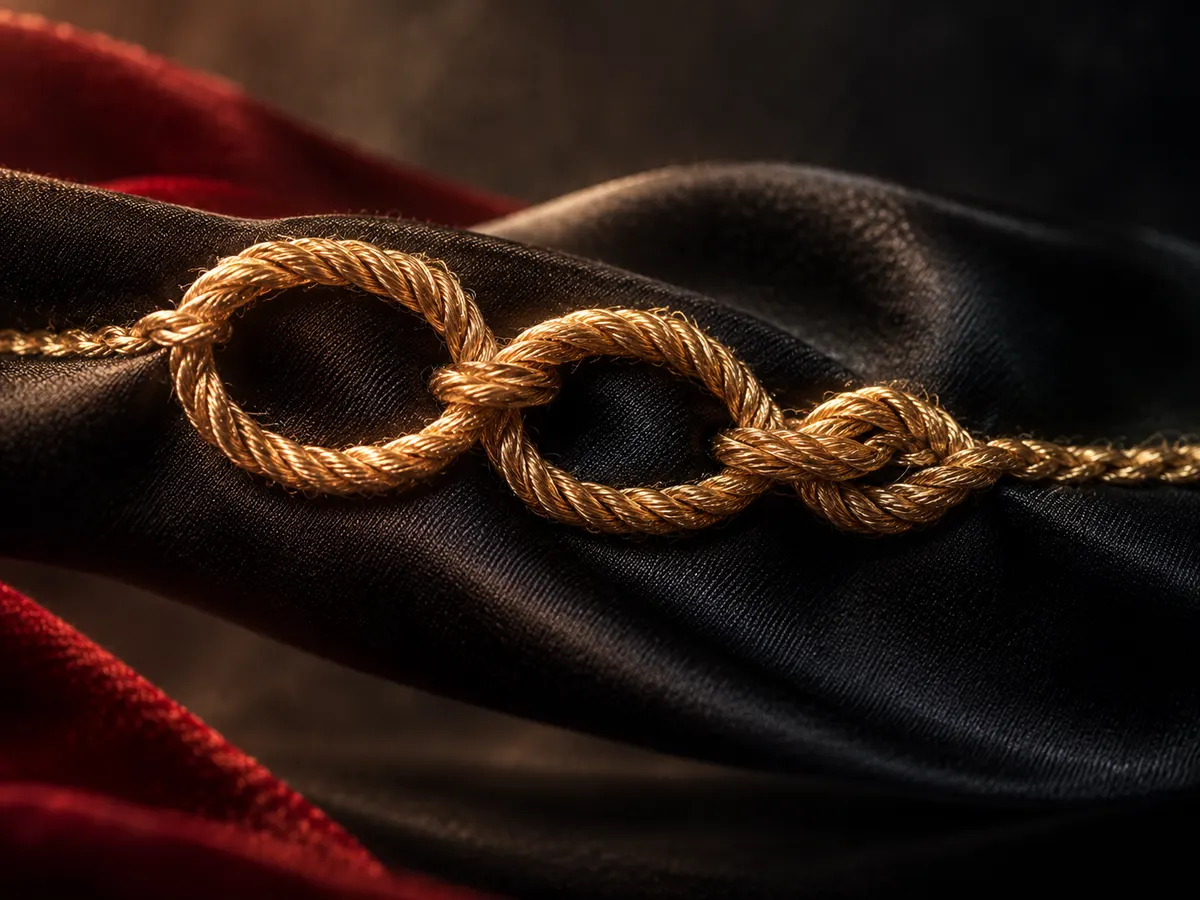
Working the loop by hand takes patience more than equipment. The embroiderer brings the needle up through the fabric and leaves a loop of thread on the surface, then puts the needle back down inside that loop and brings it up a short distance ahead, catching the loop and drawing it snug. Repeating that action produces a continuous linked line. The rhythm is simple, but consistent loop size over a long curve is where skill shows.
A machine version uses a single needle and a hook to form the loop, which is a different mechanism from a lockstitch head that interlocks two separate threads from above and below. The single thread path is what preserves the loop structure and the raised finish.
The important consequence is how the machine is operated. The needle stays in one position and the operator moves the fabric under it, steering the panel to draw the motif. The line is guided by hand in real time, so the work is closer to drawing than to running a file. That demands a steady hand and constant judgement about thread tension and machine speed, and it is why two jackets from the same workshop are never quite identical. For context on where this method fits among other regional traditions, the wider family of Japanese embroidery techniques covers the alternatives.
Why Souvenir Jackets Were Built on the Loop
Yokosuka souvenir jackets, or sukajan, took shape in the years after the Second World War when American servicemen stationed in Japan commissioned custom garments from local tailors. The jackets carried traditional Japanese motifs and were expected to survive being worn hard and carried home. The choice of a looped stitch was not incidental. It matched what the garment had to do. The longer account of how Yokosuka souvenir jackets began fills in the workshops and the people behind them.
Because each loop is locked into its neighbours, damage at one point does not automatically release the whole line the way a broken flat stitch can. That makes the work more forgiving of abrasion at cuffs, shoulders and back panels, the places a jacket actually wears. The raised line also holds shadow, which is why a motif worked this way still reads clearly from a distance after the surface colour has softened with age.
The looped line can follow the contour of a panel and change direction freely, so a motif can be laid out to suit the individual garment rather than dropped onto it as a fixed block. That flexibility is the practical reason these designs cannot simply be reprinted. The layout, the scale and the path of every line were decided while the fabric moved under the needle, which is exactly what collectors examine on an older piece.
How It Compares to Satin Stitch and Flat Fill
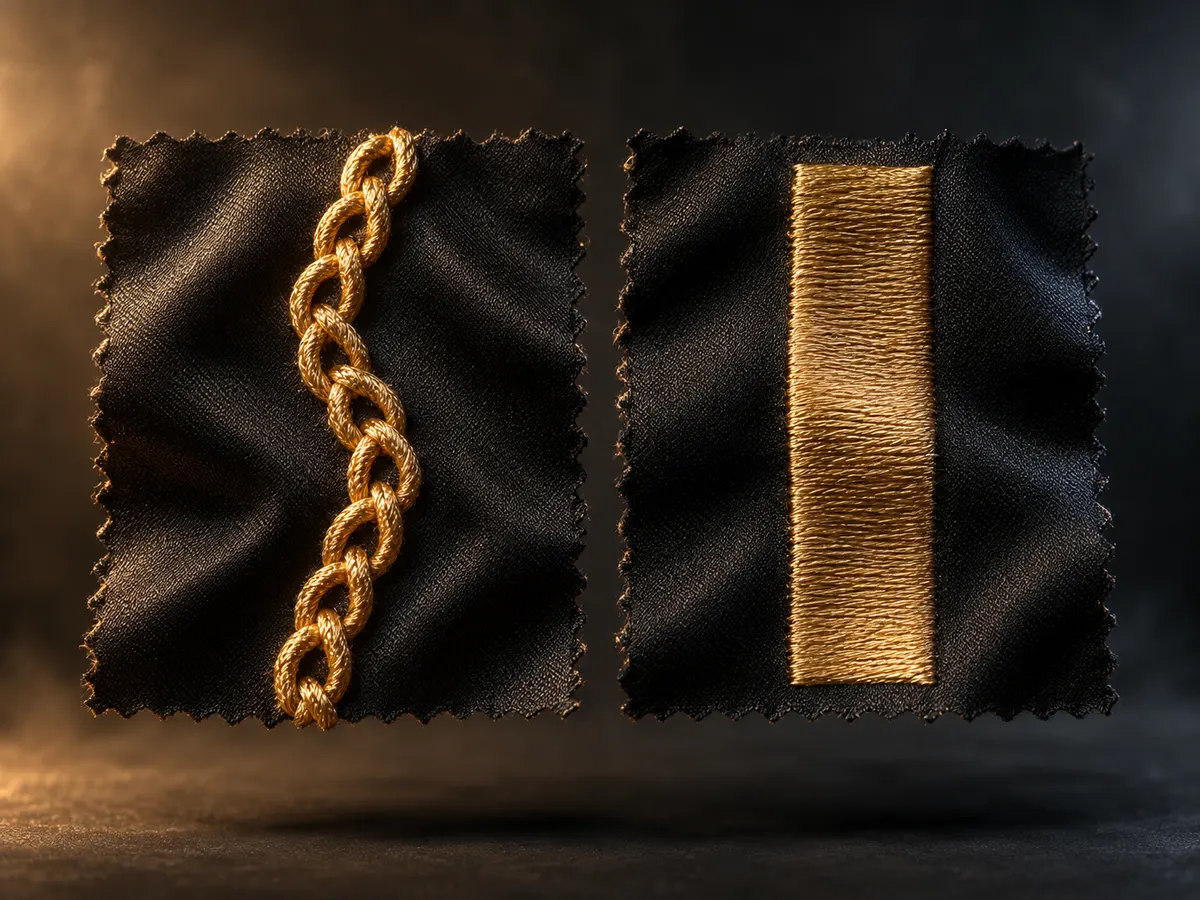
Satin stitch lays dense parallel passes side by side to produce a smooth, slightly glossy surface. It is efficient for filling solid shapes and is what most modern logo work uses, but it sits flat and gives no relief.
Flat fill works on a similar principle across larger areas, packing parallel rows to cover background space. Both approaches trade texture for coverage and speed.
The looped alternative gives up some of that smooth coverage in exchange for depth. A raised line catches light along its whole length, which is why outline heavy motifs read better this way than as filled shapes. It also frays less readily, since the interlocked structure resists the gradual thread loss that opens up flat passes at the edges. On most souvenir jacket motifs the two are used together: looped outlines carrying the drawing, filled areas carrying the colour.
How to Judge Quality on a Finished Garment
Loop consistency and spacing. Start with the line itself. Loops should be even in size and evenly spaced, producing a smooth continuous run rather than a line that tightens and loosens as it travels. Variation in loop size usually means the fabric was fed unevenly, and those sections are the ones that go slack first.
Thread tension and the reverse side. Tension problems hide where buyers rarely look. Turn the panel over if the lining allows it. The reverse should be tidy and firmly formed, with no loose hanging threads or puckered fabric around the stitch path. Slack work on the inside means the loops are not locked as securely as they appear from the front, and that is the failure that shows up after a season of wear rather than on the shop floor.
Motif edges and colour changes. Edges tell you about control. Outlines should be crisp and closed, with no blurred or frayed termination where a line ends. Where one colour meets another, the transition should be clean, without gaps that show the base cloth or overlaps that build an unwanted ridge. Careful colour changes take more thread changes and more operator time, which is precisely why they are the first thing a rushed piece gives up.
Caring for the Loops So They Stay Intact
Wash gently. A mild detergent and a cool setting are enough, and bleach or harsh cleaners will weaken the thread until loops start to give way. Turn the garment inside out first so the raised surface is not scrubbed against the drum.
Dry flat. Lay the piece on a clean towel rather than hanging it, because the weight of wet fabric pulls on the stitch path and can stretch the loops out of shape.
Store cool and dry in a breathable garment bag, and keep the piece out of direct light so colours hold. If pressing is unavoidable, use a low heat setting with a pressing cloth between the iron and the work, and press around the motif rather than directly onto it so the raised loops are not crushed flat. The same principles apply across most embroidered apparel, though heavy thread work is less tolerant of heat than a light chest logo.
If you are drawn to this kind of work, Sukaizen builds its sukajan jackets, hoodies and caps around dense motif needlework and traditional Japanese imagery rather than surface prints.
Frequently Asked Questions
What is chain stitch embroidery?
It is a technique that creates a continuous loop of thread, forming a raised, rope-like texture on the fabric surface. Each loop passes through the previous one, so the line is linked along its whole length instead of being a series of separate stitches. That structure gives the work both its depth and its resistance to unravelling. On a jacket it means the motif stands above the cloth and catches light, and it is the main reason souvenir jacket needlework still looks defined after years of wear.
How do you do a chain stitch in embroidery?
Bring the needle up through the fabric and leave a loop of thread on the surface, then insert the needle back down inside that loop and bring it up a short distance ahead so it catches and tightens the loop. Repeating that action produces a continuous linked line. Keeping loop size even through curves is the difficult part and is what separates practised work from beginner work. Machine versions use a single needle and hook to perform the same action at speed.
What is the difference between chain stitch and satin stitch?
A looped line sits raised above the fabric and is built for outlines and textured detail, while satin stitch lays dense parallel passes to create a smooth, flat, slightly glossy fill. The practical difference is depth against coverage. Raised work reads with shadow and holds its definition as colour fades, whereas a flat fill gives cleaner solid colour but no relief. Most souvenir jackets use both, with looped outlines carrying the drawing and filled areas carrying the colour blocks.
Is chain stitch embroidery durable enough for a jacket?
Yes, and durability is one of the main reasons workshops adopted it. Because each loop is locked into its neighbours, a single point of abrasion does not release the whole line the way a broken flat stitch can. That matters most at cuffs, shoulders and back panels, which take the heaviest wear on outerwear. The caveat is heat and tension rather than abrasion: crushing the loops under a hot iron or hanging the garment wet will do more damage than ordinary wear ever does.
Why is chain stitch embroidery more expensive?
The cost is operator time rather than materials. The fabric is steered by hand under a fixed needle, so the motif is effectively drawn in real time rather than run from a digitised file, and that work cannot be batched across multiple heads. Colour changes add further stoppages, since each one means rethreading. The result is a design that fits the individual garment and cannot be reproduced exactly, which is the same reason collectors treat older pieces as individual objects rather than stock items.
Conclusion
Chain stitch embroidery earns its place on a jacket through structure rather than decoration: one continuous looped thread that stands above the cloth, resists abrasion and lets a motif be drawn to fit the garment it sits on. Judge a piece by loop consistency, by what the reverse side reveals about tension, and by how cleanly the edges and colour changes are handled. Care for it gently and the raised line will outlast the fabric around it.


