

Koinobori are carp-shaped streamers flown in Japan for Children's Day on May 5. They began in the Edo period, when samurai households flew banners, and the carp stands for strength and determination because, in legend, a carp that swam up a waterfall became a dragon. Each colour traditionally represents a family member.
Key Takeaways
- When: Carp streamers are flown from late April to May 5, Children's Day, to wish children health and success.
- Colours: The black carp (magoi) represents the father, while the red carp (higoi) originally stood for the eldest son and later came to represent the mother.
- Top of the pole: The five-coloured fukinagashi and the yaguruma arrow wheel at the top are linked to warding off evil and bad luck.
- Legend: A carp that swam up a waterfall and became a dragon makes the koi a symbol of perseverance and success.
- In clothing: Koi and carp streamer motifs live on in Japanese clothing such as embroidered sukajan jackets and hoodies.
Table of Contents
- What Is a Carp Streamer?
- Where Carp Streamers Come From
- What Each Carp Colour Means
- The Fukinagashi and Yaguruma at the Top of the Pole
- The Koi That Became a Dragon
- Carp Streamers on Children's Day Today
- Carp Streamers as a Motif in Japanese Clothing
- Frequently Asked Questions
What Is a Carp Streamer?
Koinobori, or carp streamers, are vibrant, wind-catching symbols of Japanese culture, particularly prominent during Children's Day (Kodomo no Hi) on May 5. These streamers are crafted in the shape of koi fish, a species known for its resilience and strength. The tradition of flying carp streamers dates back to the Edo period, when samurai families would display banners and streamers to celebrate the health and success of their children. Over time, this custom spread to merchant families and became a nationwide tradition, symbolizing the hope for children's growth and well-being. Children's Day is part of Golden Week, a series of national holidays in Japan, making it a significant and festive occasion.
Where Carp Streamers Come From
The origins of carp streamers can be traced back to the Edo period. Initially, samurai households would display banners and streamers to celebrate Tango no Sekku, the boys' festival, which was held on May 5. These early streamers often featured the family crest (mon) and were a symbol of status and pride. As the custom gained popularity, merchant families began to adopt the practice, but with a twist. Instead of traditional banners, they flew colourful carp-shaped streamers, which were more accessible and easier to produce. The koi fish, known for its perseverance and strength, became a fitting symbol for the aspirations parents had for their children. Since 1948, Children's Day has celebrated the health and happiness of all children, not just boys, further broadening the significance of carp streamers.
What Each Carp Colour Means
The colours of the carp streamers hold significant meaning and represent different family members. The large black carp (magoi) symbolizes the father, embodying strength and leadership. The red carp (higoi) originally stood for the eldest son but has evolved to represent the mother, symbolizing love and nurturing. Smaller carp in various colours, such as blue, green, purple, or orange, represent the children, with each colour often chosen to reflect the family's preferences or regional traditions. The choice of colours and their arrangement on the pole reflect the family's unity and aspirations for each member's success and well-being. Many families display a set on a balcony when there is no garden, ensuring that the tradition can be observed by all.
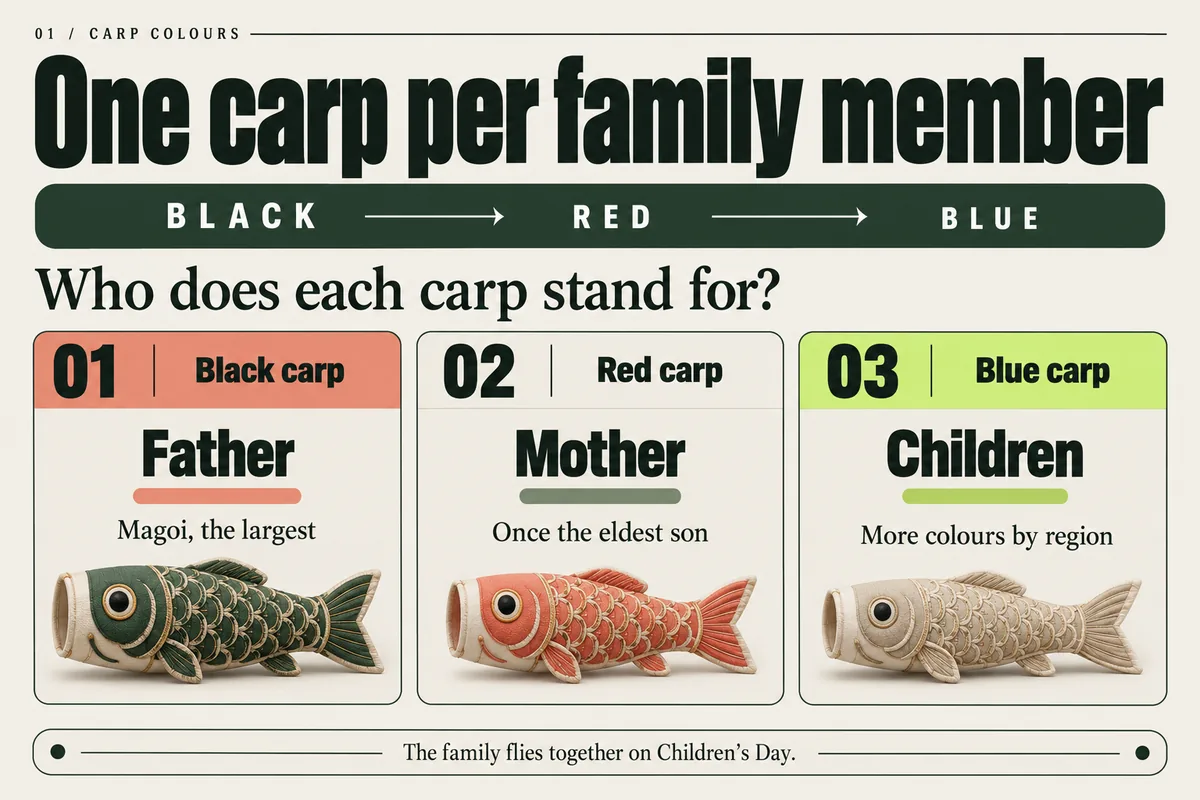
| Carp colour | Traditional meaning | Later or regional meaning | |---|---|---| | Black (magoi) | The father | Still the largest carp | | Red (higoi) | The eldest son | Often the mother today; sometimes pink | | Blue | A younger son | Followed by green, purple or orange by region |
The Fukinagashi and Yaguruma at the Top of the Pole
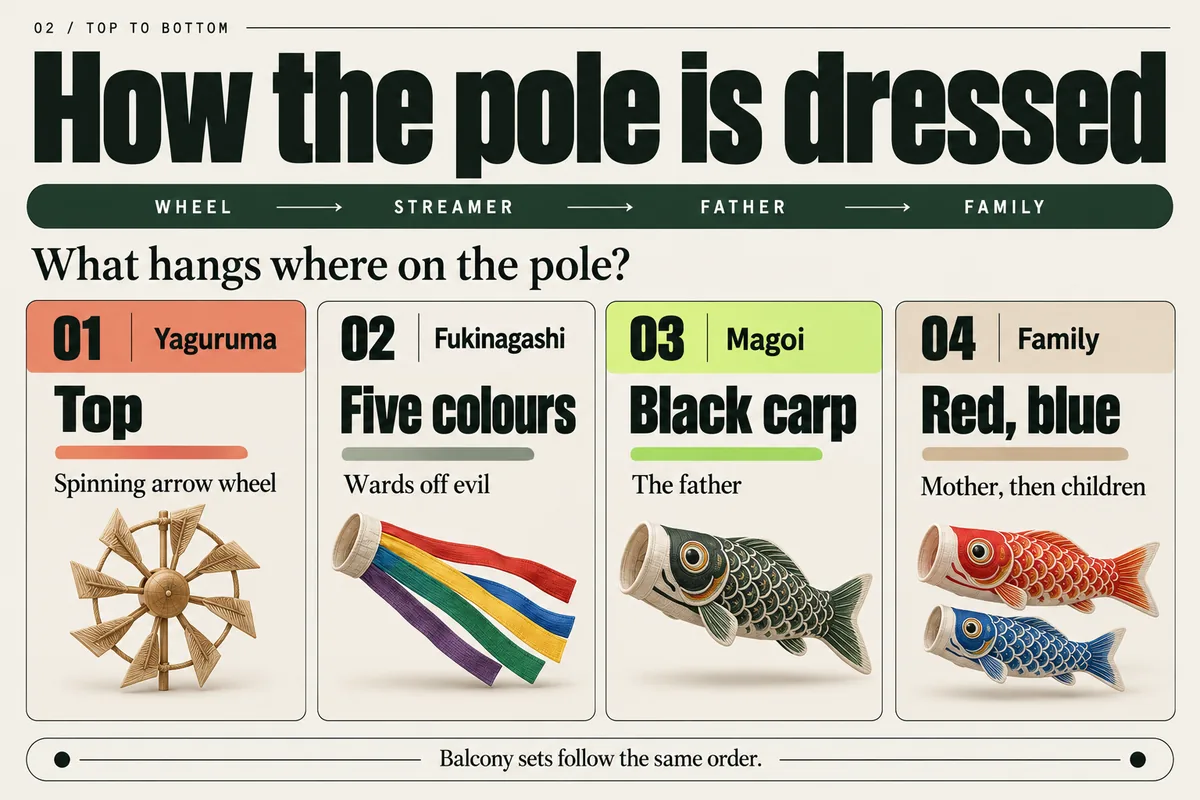
At the top of the streamer pole, you'll find two important elements: the fukinagashi and the yaguruma. The fukinagashi is a five-coloured streamer that is linked to the five elements and is believed to ward off evil spirits. The yaguruma, an arrow-wheel pinwheel, spins at the very top of the pole, also serving to repel bad luck and bring good fortune. Together, these elements create a protective and celebratory atmosphere, ensuring that the carp streamers not only look beautiful but also carry deep symbolic meaning. The fukinagashi and yaguruma work in harmony to create a visually striking and spiritually significant display.
The Koi That Became a Dragon
The legend of the koi that became a dragon is a central part of the carp streamer tradition. According to the Chinese Dragon Gate (Longmen) legend, a carp that successfully swam up the waterfall at the Dragon Gate was transformed into a dragon, a symbol of perseverance, strength, and success. This story underscores the symbolic importance of the koi fish in Japanese culture, representing the determination and resilience required to overcome challenges and achieve one's goals. The koi's transformation into a dragon is a powerful metaphor for the journey from childhood to adulthood, a theme that resonates deeply with the spirit of Children's Day. Our koi and dragon mythology guide follows the legend further.
Carp Streamers on Children's Day Today
Today, carp streamers are a beloved part of Children's Day celebrations in Japan. Families fly these carp streamers from late April to May 5, the official date of Children's Day, which is a national holiday. The tradition is a way to wish children health, happiness, and success. Here’s how a typical streamer set is hung from top to bottom:
- Yaguruma (arrow-wheel pinwheel at the very top)
- Fukinagashi (five-coloured streamer)
- Black carp (magoi)
- Red carp (higoi)
- Smaller carp (various colours)
Many towns and cities also organize community events where hundreds of carp streamers are strung across rivers and parks, creating a stunning and festive sight. These events bring communities together, fostering a sense of unity and celebration. The sight of carp streamers fluttering in the wind is a heartwarming reminder of the importance of family and the aspirations for children's well-being.
Carp Streamers as a Motif in Japanese Clothing
The koi and carp streamer motifs have found their way into Japanese clothing, particularly in the form of sukajan souvenir jackets and other embroidered apparel. For instance, Sukaizen's carp streamer sukajan showcases three stacked streamers (red, black, and blue) up the back, with wind lines across the shoulders. Made from a rayon satin shell with a viscose lining and ribbed trims, it offers a relaxed fit in sizes M to 4XL.
Another notable piece is the dragon and koi sukajan, which is reversible, featuring a scarlet dragon on one side and a pearl-ivory koi on the reverse.
The koi embroidered hoodie, made from black French terry, features a large koi on the back. Each piece is machine embroidered on Tajima embroidery machines with polyester thread. The koi-to-dragon legend makes koi a popular motif for perseverance on sukajan and festival happi, and a carp streamer motif works as a reminder of family and growth.
Frequently Asked Questions
What is koinobori used for?
Carp streamers are used to celebrate Children's Day (Kodomo no Hi) in Japan on May 5. They are flown to wish children health, happiness, and success, symbolizing strength, perseverance, and determination. The streamers are often displayed in gardens or on balconies, creating a festive and visually striking display.
What is the meaning of koinobori?
Carp streamers symbolize the strength, perseverance, and determination of the koi fish, which, according to legend, transforms into a dragon after swimming up a waterfall. Each carp colour represents a family member, symbolizing unity and aspirations for their success. The black carp (magoi) represents the father, the red carp (higoi) represents the mother, and smaller carp in various colours represent the children.
Is koinobori for boys or girls?
Carp streamers were originally flown for boys during the boys' festival (Tango no Sekku). However, since 1948, Children's Day celebrates all children, and carp streamers are now flown for both boys and girls, symbolizing the health and success of all children. This change reflects a broader recognition of the importance of celebrating and supporting all children equally.
Where can I buy koinobori?
Carp streamers can be purchased in Japan from department stores, specialist doll and festival shops, and online retailers. They are widely available in the spring, especially around late April to May 5. Sizes range from small balcony sets to tall garden poles, making it easy for families to find a set that suits their space and preferences.
How do you hang koinobori?
To hang carp streamers, you need a tall pole, typically placed in a garden or on a balcony. The setup, from top to bottom, consists of: an arrow-wheel pinwheel (yaguruma), a five-coloured streamer (fukinagashi), a large black carp (magoi), a red carp (higoi), and smaller carp in various colours. This arrangement ensures the streamers catch the wind and create a beautiful, fluttering display.
Conclusion
Carp streamers are more than colourful decorations; they are a symbol of strength, perseverance, and family unity. Whether flown in a garden or worn on a sukajan jacket, these carp-shaped streamers continue to inspire and celebrate the health and success of children. By understanding the rich history and symbolism behind carp streamers, we can appreciate the cultural depth and beauty they bring to Japanese traditions. The carp streamer tradition not only honors the past but also looks forward to a bright and hopeful future for the next generation.


