

An uchikake is a long, heavily decorated outer kimono worn open over a kimono, today mainly by brides at Japanese weddings. It trails on the floor and is padded at the hem. A white one belongs to the shiromuku ensemble; a coloured one is an iro-uchikake, often embroidered with cranes, pine, or flowers. Below you will find how the robe is worn, what its motifs and colours mean, and how the same symbols appear in modern embroidered wear.
Key Takeaways
- What it is: The robe is a long, trailing outer kimono worn open over a bride's kimono and obi, never tied shut.
- Shiromuku vs coloured robe: The shiromuku is an all-white ensemble for the Shinto wedding ceremony, while the coloured robe is a coloured version often worn for the reception.
- Motifs: Common bridal robe motifs include cranes for longevity, pine for steadfastness, plum blossoms for perseverance, and peonies for prosperity.
- Colours: Bridal robe colours have symbolic meanings: red for celebration, gold for prosperity, and white for purity.
- Modern wear: Modern embroidered wear often borrows bridal robe motifs, but it is not a ceremonial bridal robe.
Table of Contents
- What Is This Bridal Over-Kimono?
- Shiromuku vs Coloured Bridal Robes
- How the Bridal Robe Is Worn
- Bridal Robe Motifs and What They Mean
- Bridal Robe Colours and Their Symbolism
- From Bridal Robe to Modern Embroidered Wear
What Is This Bridal Over-Kimono?
The word comes from the Japanese verb uchi-kakeru, which means "to drape over." The name describes the garment well: a long, floor-length outer kimono that is worn open and draped over the kimono and obi. Unlike other kimonos, the robe is never tied shut with its own sash. This formal outerwear developed during the Muromachi and Edo periods as a status symbol for women of the samurai class. Today, it is primarily associated with Japanese weddings, where it is worn by brides to add a touch of elegance and tradition to their attire.
Historical Context
During the Muromachi and Edo periods, it was a symbol of wealth and status, often adorned with intricate embroidery, woven patterns, or dyeing techniques. Its decoration displayed the wearer's rank, and auspicious motifs carried wishes for good fortune. Museum collections such as the Metropolitan Museum of Art and the Art Institute of Chicago hold Edo-period examples of these robes.
Construction and Design
The construction of a bridal robe is meticulous and purposeful. It is designed to trail behind the bride, creating a dramatic and elegant effect. The hem of the robe is padded (the fuki), which adds weight and creates a rounded edge, enhancing the graceful line when the bride walks. The robe is typically heavily decorated, with embroidery, woven patterns, or dyeing techniques that often feature traditional motifs and symbols.
Shiromuku vs Coloured Bridal Robes
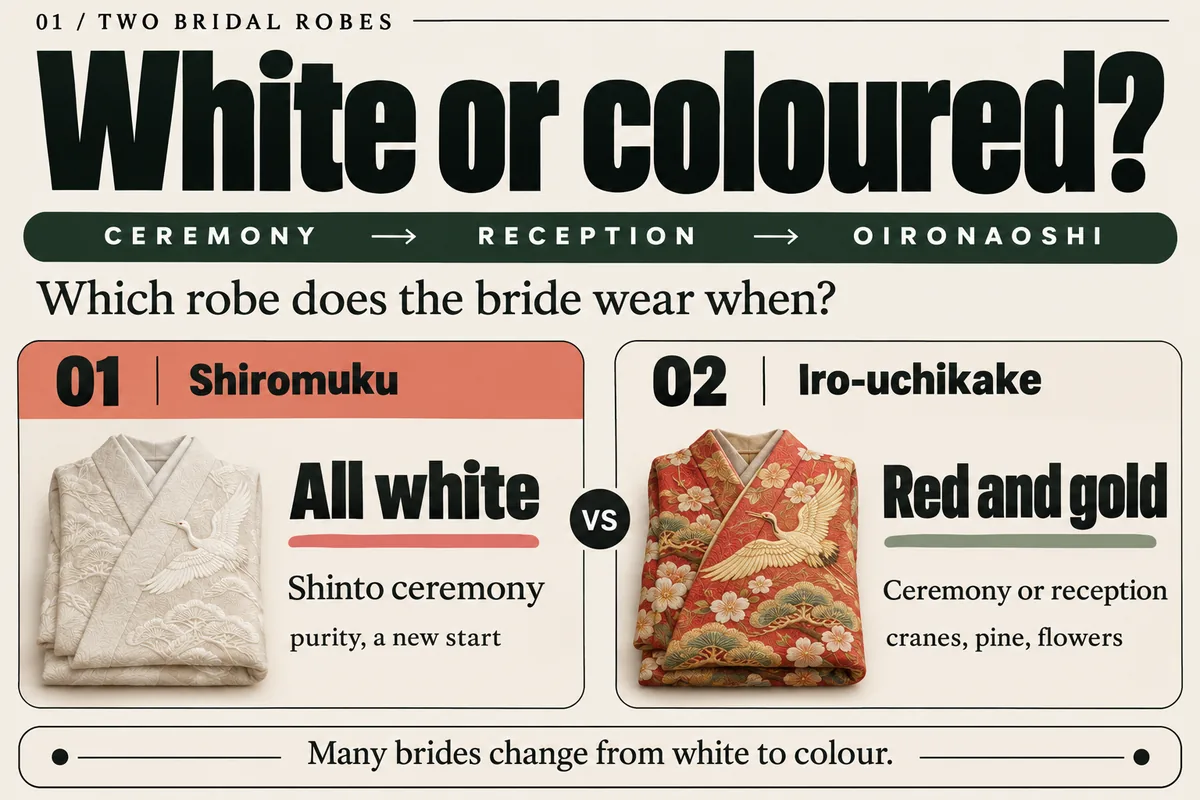
These bridal robes fall into two groups: the white robe of the shiromuku ensemble and the coloured robe.
Shiromuku
The shiromuku is an all-white ensemble, consisting of a white over-robe worn over a white kimono. This traditional attire is most closely associated with the Shinto wedding ceremony, where the bride symbolizes purity and a new beginning. The patterns on a shiromuku are often white on white, featuring intricate designs such as woven cranes or flowers. The ensemble is typically complemented with a white hood (wataboshi) or a headpiece (tsunokakushi), which adds to the bride's ethereal appearance.
The Coloured Robe
The coloured robe, on the other hand, is a coloured version of the robe. It is often worn for the reception or during the ceremony, depending on the bride's preferences. Common colours include red, gold, and many-coloured designs. Many brides opt to change from their shiromuku into a coloured robe for the reception, a practice known as oironaoshi.
How the Bridal Robe Is Worn
Wearing a bridal robe is a meticulous process that requires attention to detail and often the assistance of attendants. The bride first puts on the kakeshita, the kimono worn underneath, and ties it with an obi. The robe is then placed over the shoulders and left open, creating a flowing and elegant silhouette. The bride must lift and hold the front edges of the robe when walking to avoid tripping, and attendants help manage the trailing hem. Due to its weight, the robe is typically worn for a few hours during the ceremony and photo sessions.
Bridal Robe Motifs and What They Mean
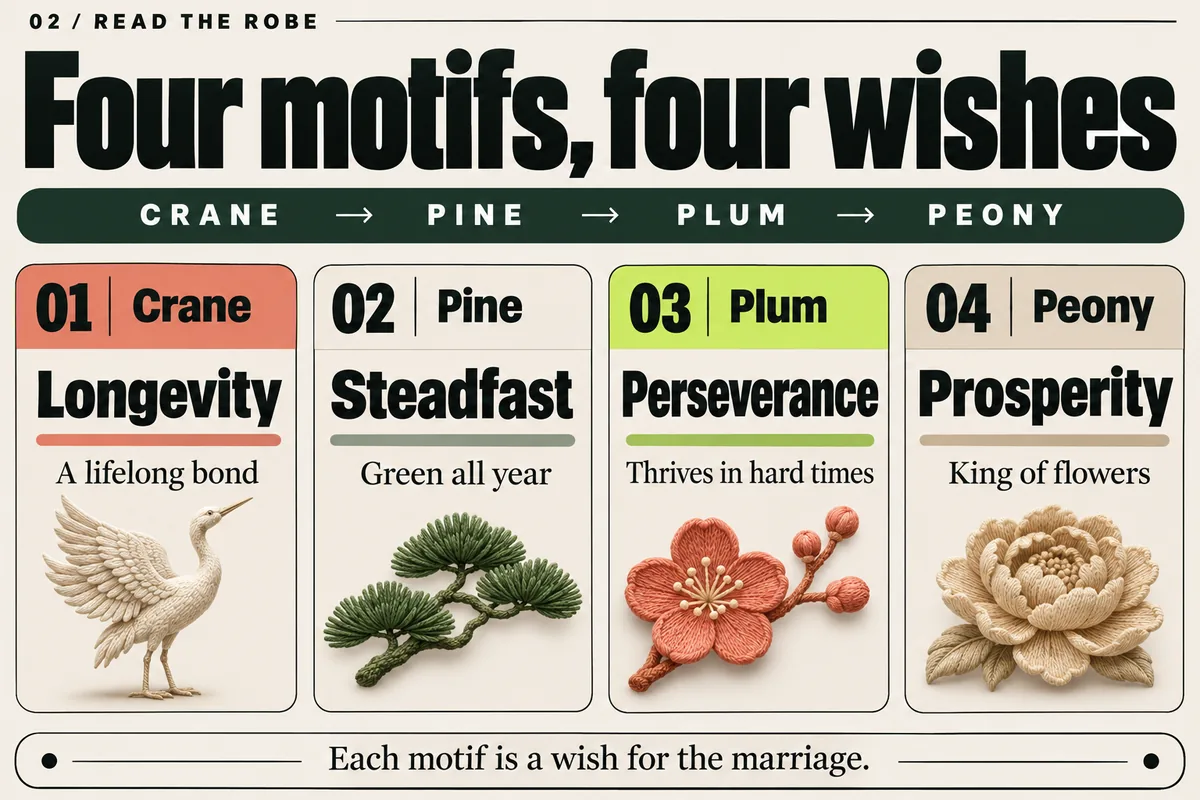
The motifs found on a bridal robe are rich in symbolism and are chosen to convey wishes of happiness, longevity, and prosperity to the newlyweds. Each motif has a specific meaning and plays a role in the overall design of the robe.
Crane (Tsuru)
The crane, or tsuru, is a common motif on bridal robes and is deeply symbolic in Japanese culture. Cranes are believed to pair for life, making them a symbol of longevity and a lifelong bond. When embroidered on a bridal robe, cranes represent the hope for a long and harmonious marriage.
Pine (Matsu)
Pine, or matsu, is another popular motif. Pine trees are evergreen and remain green throughout the year, symbolizing longevity and steadfastness. When featured on a bridal robe, pine trees convey the wish for the couple's relationship to remain strong and enduring.
Plum Blossom (Ume)
The plum blossom, or ume, is known for its resilience and beauty. It blooms in late winter, symbolizing perseverance and the ability to thrive in difficult conditions. When embroidered on a bridal robe, plum blossoms represent the hope for the couple to overcome challenges and grow stronger together.
Peony (Botan)
The peony, or botan, is often referred to as the king of flowers. It is a symbol of prosperity and good fortune. When featured on a bridal robe, peonies convey the wish for the newlyweds to enjoy a life filled with abundance and success.
Butterflies (Cho)
Butterflies, or cho, are symbols of joy and transformation. They represent the transformation that the couple undergoes as they embark on their new life together. When embroidered on a bridal robe, butterflies add a touch of elegance and hope for a joyful and transformative marriage.
Clouds and Mandarin Orange (Tachibana)
Auspicious clouds and the mandarin orange, or tachibana, are also common motifs on these robes. Clouds symbolize good fortune and a bright future, while the mandarin orange is another sign of good fortune. These elements, when included in the design, convey the best wishes for the couple's future.
Bridal Robe Colours and Their Symbolism
The colours chosen for a bridal robe are not random; each hue carries its own symbolic meaning and adds to the overall significance of the garment.
| Garment | Colour | When worn | Typical motifs |
|---|---|---|---|
| Shiromuku | All white | Shinto ceremony | White-on-white woven cranes and flowers |
| Coloured bridal robe | Red, gold, multicolour | Reception or ceremony | Cranes, pine, plum, peony, butterflies |
| Furisode | Coloured, long sleeves | Unmarried women's formal wear | Seasonal flowers |
Red
Red is a vibrant and celebratory colour in Japanese culture. It is often associated with joy, celebration, and protection against bad luck. A red robe is a popular choice for the reception, adding a lively and festive touch to the wedding celebration.
Gold
Gold is a symbol of prosperity and wealth. A coloured robe in gold conveys the wish for the couple to enjoy a life of abundance and success.
White
White is a colour of purity and new beginnings. The shiromuku, an all-white ensemble, is worn during the Shinto wedding ceremony to symbolize the bride's purity and the new chapter in her life. The white-on-white patterns, such as woven cranes or flowers, add a subtle and elegant touch to the attire.
Black
While less common in modern weddings, black was traditionally used in formal bridal robes. It symbolized formality and dignity, often paired with gold or silver embroidery to add a touch of elegance. Black robes can still be found in some traditional weddings, adding a classic and timeless element to the attire.
From Bridal Robe to Modern Embroidered Wear
The rich symbolism and beauty of the robe have inspired modern designers to incorporate its motifs into contemporary embroidered wear. While these modern pieces are not ceremonial bridal robes, they pay homage to the traditional motifs and symbols, allowing people to wear a piece of Japanese culture in their everyday lives.
A Robe That Borrows the Crane Imagery
The Gold Crane Bridal Kimono Robe from Sukaizen is a soft blush-pink robe with a satin-finish shell and gold-and-ivory cranes and clouds. The cranes rise diagonally from the lower left hem across the back to the right shoulder, with smaller cranes on both sleeves and a gold border along the front placket and hem. This robe borrows the crane imagery of the coloured bridal robe, but it is not one and is not ceremonial dress; it is best treated as a modern piece.
A Crane and Sakura Sukajan
Among the crane jackets, the Crane & Sakura Reversible Sukajan Jacket is another example. This jacket is made from midnight navy and muted burgundy rayon satin and features crane, moon, and sakura embroidery. The reversible design allows the wearer to enjoy two different looks, and its cranes echo the bridal robe's favourite motif in an everyday jacket.
A Minimal Tsuru Jacket
The Tsuru & Cloud Minimal Sukajan is a more subtle interpretation of the robe motifs. This jacket features one crane at the left chest, a cloud band inside the collar, and a blank back. Available in icy blue and white with silver thread, this minimalist design suits those who prefer a more understated look. Sukaizen embroiders it on Tajima embroidery machines with polyester thread.
Frequently Asked Questions
What does uchikake mean?
The name comes from the Japanese verb uchi-kakeru, which means "to drape over." It is a long, floor-length outer kimono worn open over a bride's kakeshita kimono and obi, never tied shut. The robe features a padded hem called fuki, which adds a luxurious touch to the garment. This formal outer wear was developed as a symbol of elegance and status for samurai-class women during the Muromachi and Edo periods.
Who wears uchikake?
The robe is primarily worn by brides at Japanese weddings. It is a formal outerwear piece that adds a touch of elegance and tradition to the bride's attire. Historically, it was a symbol of high social status, particularly among samurai-class women, and today it continues to be a significant part of the wedding ceremony, reflecting the bride's beauty and cultural heritage.
When to wear uchikake?
The robe is typically worn during the wedding ceremony and photo sessions. A bride who wears the white shiromuku for the ceremony often changes into a coloured robe or another outfit for the reception. The robe is often worn for only a few hours due to its weight and the effort required to wear it, but its presence during the ceremony and photos makes it a memorable and significant part of the wedding day.
What is the difference between shiromuku and iro-uchikake?
The shiromuku is an all-white ensemble worn by the bride during the Shinto wedding ceremony, symbolizing purity and a new beginning. It often includes a wataboshi hood or tsunokakushi headpiece. The coloured robe, on the other hand, comes in red, gold, or multicolored, and is worn for the reception. The change from shiromuku to the coloured robe, known as oironaoshi, is a tradition that adds a touch of color and vibrancy to the celebration, reflecting the transition from the solemn ceremony to the festive reception.
Conclusion
The robe is a beautiful and meaningful piece of Japanese wedding attire, rich in symbolism and tradition. From the intricate motifs to the symbolic colors, each element of the robe holds deep cultural significance. Its presence in modern weddings continues to honor the heritage and elegance of Japanese culture.


