


The price of a sukajan jacket can vary widely, from affordable reproductions to high-end vintage collectibles. Understanding the factors that influence the cost can help you make an informed purchase decision. Whether you're drawn to the intricate dragon motifs or the historic significance of these Japanese souvenir jackets, knowing the price tiers and what sets them apart is crucial. Check what to check before buying one for more details.
Key Takeaways
- Mass-market reproductions are the most affordable option, often made with synthetic materials and machine embroidery.
- Mid-tier embroidered sukajan jackets use higher-quality fabrics and more detailed hand-embroidery, justifying a higher price point.
- Heritage-house sukajan jackets are crafted by renowned brands with a focus on authenticity and tradition, commanding premium prices.
- Vintage collectible sukajan jackets are rare and highly sought after, with prices reflecting their historical and cultural value.
- Construction differences such as fabric quality, embroidery technique, and brand heritage are key factors that move a jacket from one price tier to another.
The short answer on price
Sukajan jackets range from about $30 to over $8,000. That spread reflects real differences in materials, construction, and provenance rather than branding alone. At the bottom the shell is thin synthetic satin carrying a printed design or very sparse machine stitching. At the top the embroidery is hand-guided on premium satin, and the piece is often one of a kind.
Understanding where a jacket sits in that range matters more than the headline number, because two jackets at the same price can differ sharply in stitch density and lining quality. The figures below are the tiers the market actually falls into, and what separates each one from the next.
Sukaizen's own embroidered sukajan jackets are priced $169 to $199, which places them just above the entry-level Japanese-market band and below the heritage reproduction houses.
The four price tiers and what separates them
Tier one runs roughly $30 to $90. These are mass-market pieces carrying a printed design or very low-density machine embroidery on thin synthetic satin. They read as a sukajan at a glance and rarely survive close inspection, since the stitching is sparse enough that the base cloth shows through the motif.
Tier two runs roughly $135 to $150, with rayon examples usually starting around $200. These are entry-level Japanese-market jackets with real embroidery at moderate density. The motif is stitched rather than printed, the satin has more body, and the rib holds its shape, though the thread work is run from a digitised file rather than guided by hand.
Tier three runs roughly $300 to $1,200. Heritage reproduction houses work hand-guided embroidery on premium satin, with dense stitch coverage, quality ribbing and a full lining. Tier four, original vintage pieces made in Japan before the mid 1960s, runs roughly $1,500 to $8,000 and above. These are often one of a kind and are valued for provenance as much as for construction, which is a separate skill set covered in the guide to buying vintage examples.
Where the money actually goes in construction
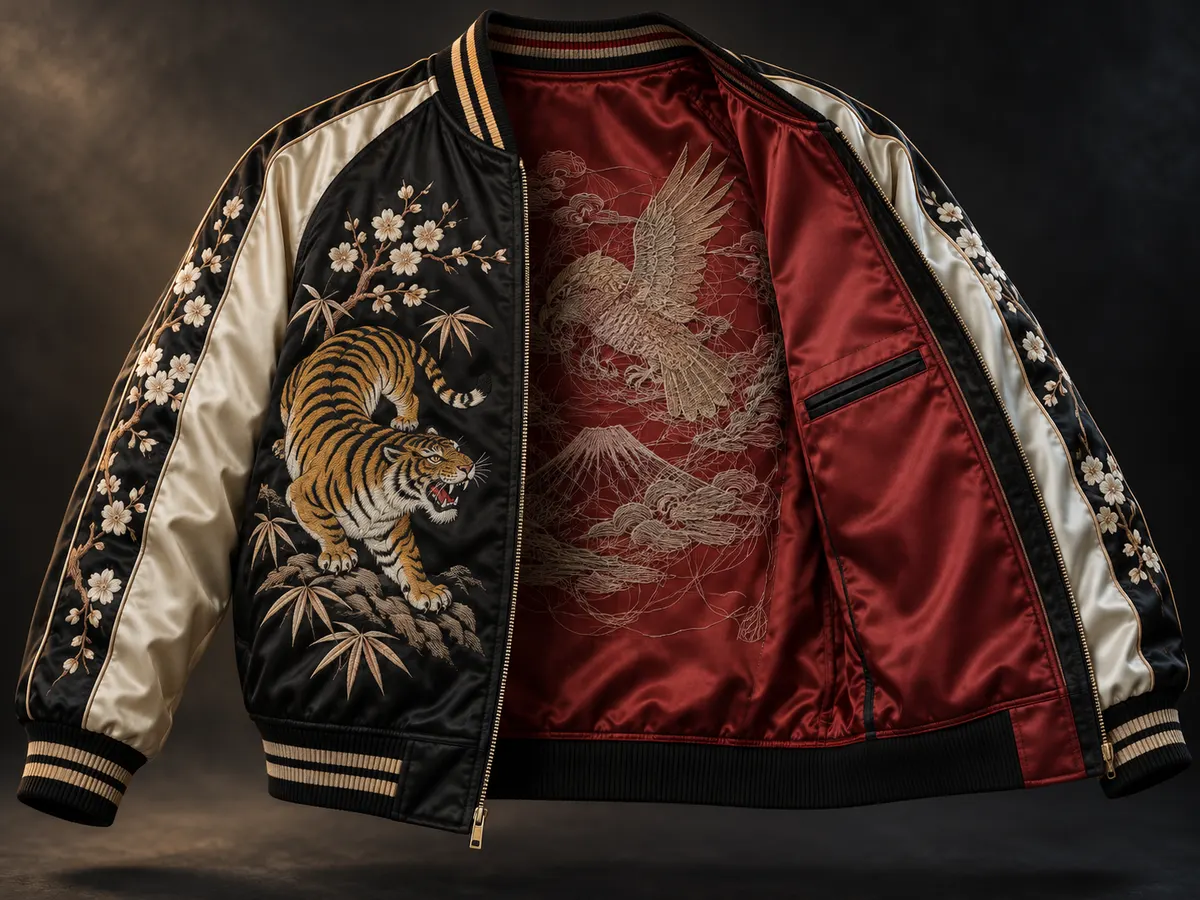
The cost of a sukajan jacket is heavily influenced by the materials used. High-quality materials, such as silk and wool, are more expensive than synthetic alternatives. The choice of fabric not only affects the look and feel of the jacket but also its durability and longevity. Premium materials can significantly increase the cost, especially in higher-tier jackets.
Another significant factor is the embroidery technique. Hand embroidery is a time-consuming and highly skilled process, which commands a higher price. The complexity and detail of the embroidery, such as the number of stitches and the use of multiple colors, can greatly impact the final cost. Machine embroidery, while faster and more cost-effective, lacks the depth and artistry of hand-embroidered designs.
Lastly, the brand and heritage of the jacket play a role in the price. Vintage and heritage-house sukajan jackets often carry a premium due to their historical significance and the craftsmanship of the era. These pieces are not just clothing; they are collectibles that tell a story of where the jackets came from and hold value over time.
What drives vintage and collector pricing
Vintage sukajan jackets often command premium prices due to their historical significance and craftsmanship. Each piece is a tangible link to a bygone era, reflecting the cultural and social context of its time. Collectors value these jackets not just for their aesthetic appeal but for the stories they tell, making them more than mere garments.
The rarity and condition of a vintage sukajan also play a crucial role in its value. Authentic pieces from the 1940s and 1950s are exceedingly rare, and those in excellent condition can fetch significantly higher prices. The materials and embroidery techniques used in these jackets are often superior and more intricate, adding to their desirability.
Finally, provenance and documentation can significantly enhance the value of a vintage sukajan. Jackets with documented history, such as being worn by a notable figure or part of a significant collection, can command even higher prices. This background adds a layer of authenticity and prestige that collectors are willing to pay for.
Signs a jacket is overpriced for its tier
When assessing the price of a sukajan jacket, it's important to look for signs that might indicate it's overpriced for its tier. One key indicator is the quality of materials and construction. If a jacket is marketed as a mid-tier or heritage piece but uses low-quality fabrics or has poor stitching, it may be overpriced. Authenticity and craftsmanship should always align with the price tag.
Another red flag is the lack of transparency about the jacket's origin and production. Reputable brands and sellers will provide detailed information about the materials, manufacturing process, and any historical context. If a seller is vague or evasive about these details, it could be a sign that the jacket is not worth the buying vintage examples price being asked.
Lastly, compare the jacket's price with similar offerings in the market. If a sukajan jacket is priced significantly higher than comparable pieces, without clear justification in terms of quality or rarity, it may be overpriced. Market research and a bit of due diligence can help you make an informed decision.
Matching a tier to how you will actually wear it
Choosing the right tier of sukajan jacket depends on how you plan to wear and use it. For those who are looking for a stylish, casual piece to incorporate into their everyday wardrobe, a mass-market reproduction might be the best choice. These jackets offer a similar look at a more affordable price, making them accessible for regular wear.
If you want a higher quality and more durable option, a mid-tier embroidered sukajan could be ideal. These jackets often feature better craftsmanship and materials, making them suitable for both casual and special occasions. They strike a balance between affordability and quality, perfect for those who want a piece that will stand the test of time.
For enthusiasts and collectors, a heritage-house or vintage sukajan is the ultimate choice. These jackets are often heirloom pieces, designed to be cherished and passed down. They offer unparalleled craftsmanship and historical significance, making them worth the investment for those who appreciate the where the jackets came from rich heritage and artistry of these iconic garments.
Frequently Asked Questions
How much does a sukajan jacket cost?
A sukajan jacket can range from $30 to over $8,000, depending on the quality and origin. Mass-market printed or low-density machine jackets are the most affordable, often under $90. Entry-level Japanese-market jackets start around $135 to $150, and rayon examples usually start around $200. Heritage reproduction houses, known for hand-guided embroidery on premium satin, run roughly $300 to $1,200. Original vintage pieces made in Japan before the mid 1960s can command $1,500 to $8,000 and above.
Why are sukajan jackets so expensive?
Sukajan jackets are expensive due to their intricate embroidery and high-quality materials. Heritage-house and vintage jackets often use traditional silk and wool, which are costly. The time and skill required for detailed embroidery, especially by hand, also drive up the price. Additionally, limited production and historical value, particularly for vintage pieces, contribute to their premium cost. Each stitch and material choice reflects the artisan's expertise and the jacket's cultural heritage.
Are vintage sukajan jackets worth the price?
Vintage sukajan jackets are worth the price due to their historical significance and unique craftsmanship. These jackets often feature one-of-a-kind designs and materials that are no longer available, making them collectibles. The rarity and authenticity of vintage sukajan jackets can make them valuable investments for enthusiasts and collectors. While they are more expensive, the cultural and artistic value they offer justifies the cost for many buyers.
What is a fair price for an embroidered sukajan?
A fair price for an embroidered sukajan can range from $30 to over $1,200, depending on the quality and origin. Mass-market printed or low-density machine jackets typically cost around $30 to $90. Entry-level Japanese-market jackets start around $135 to $150, and rayon examples usually start around $200. Heritage-house sukajan jackets, known for their intricate craftsmanship and premium materials, run roughly $300 to $1,200. Vintage collectibles, given their rarity, command $1,500 to $8,000 and above.
Is a cheap sukajan jacket worth buying?
A cheap sukajan jacket, typically priced around $30 to $90, can be worth buying if you are looking for a casual, affordable option. These jackets often use synthetic materials and machine embroidery, which can affect durability and detail. However, they still capture the iconic design and can be a good choice for everyday wear. Just be aware that the quality and longevity may not match more expensive, hand-embroidered options, and consider your intended use and budget.
Conclusion
When considering a sukajan jacket price, the key is to match the tier to your needs. Mass-market reproductions offer affordability, mid-tier jackets provide better quality, heritage-house options ensure craftsmanship, and vintage collectibles are for those seeking unique, historical pieces. Each tier has its own value proposition, so choose based on your budget and the level of craftsmanship you desire.


