

The rabbit on the moon is a pattern of dark lunar plains that many Asian cultures read as a rabbit. In Japan, tsuki no usagi pounds rice into mochi, while in China it pounds the elixir of life. The story traces back to a Buddhist Jataka tale about a selfless rabbit. This ancient legend has deep roots in Japanese culture and continues to inspire art, design, and even modern apparel.
Key Takeaways
- The rabbit on the moon: A pattern of dark lunar plains (lunar maria) visible from Earth.
- Tsuki no Usagi: Pounds rice into mochi and is closely linked with the moon-viewing custom Tsukimi.
- Rabbit motif: Represents good fortune, fertility, and the moon in Japanese design.
- Buddhist Jataka tale: The legend of a selfless rabbit who offers itself as food.
- Mochi and elixir: Japanese and Chinese versions of the legend highlight different activities and symbolism.
Table of Contents
- Why People See a Rabbit in the Moon
- The Japanese Legend: Tsuki no Usagi
- Mochi or Elixir? Japanese and Chinese Versions Compared
- The Buddhist Jataka Story Behind It
- Tsukimi: Moon Viewing and the Rabbit
- The Moon Rabbit in Japanese Art and Design
- Wearing the Legend: Usagi Motifs Today
- Frequently Asked Questions
Why People See a Rabbit in the Moon
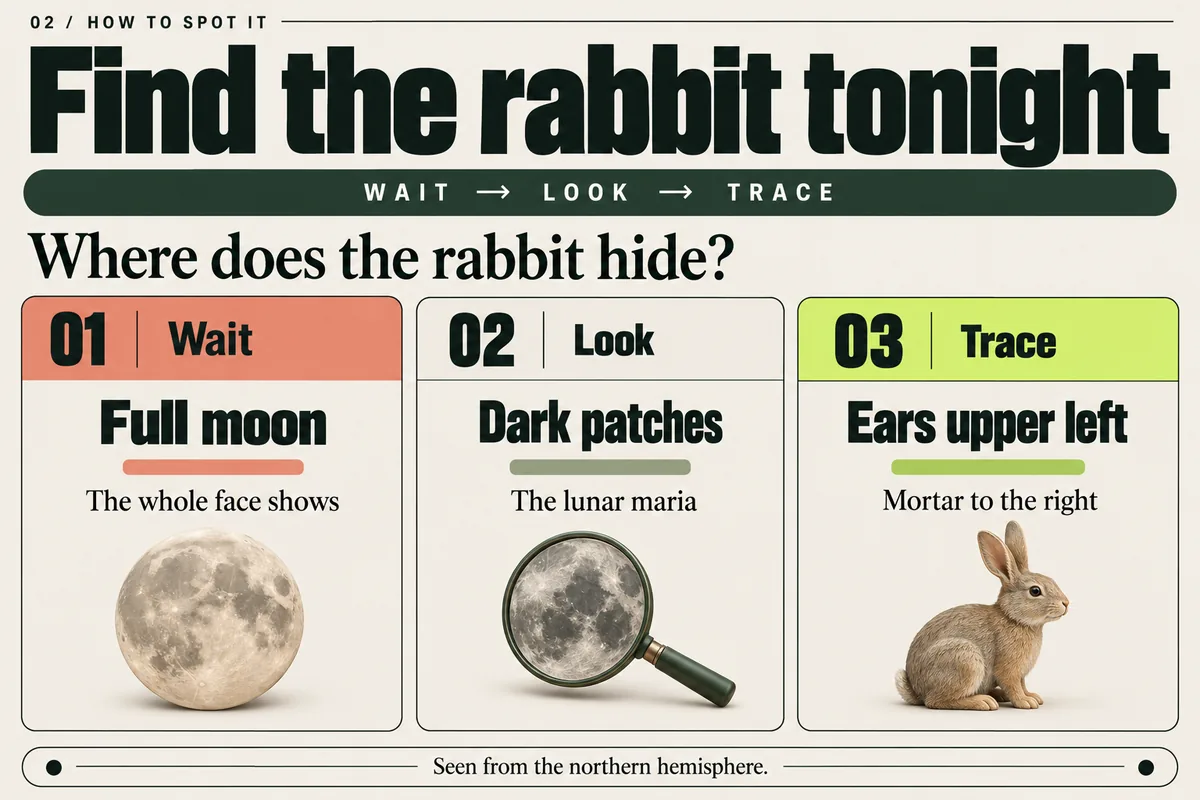
The moon rabbit is a pattern formed by the dark basaltic plains, known as lunar maria, on the near side of the moon. These dark areas create the illusion of a rabbit, particularly when viewed from the northern hemisphere. The rabbit's ears point toward the upper left of the full moon, with the pounding mortar to its right. While other cultures see different shapes, such as a man in the moon, the rabbit remains a prominent figure in Asian folklore. Our guide to Japanese mythical creatures covers the wider company it keeps.
This image has deep cultural significance. In the Konjaku Monogatarishu, a late Heian-period story collection, the tale of the rabbit, a fox, and a monkey is told. The fox and monkey bring food to an old man, while the rabbit, finding nothing, offers itself by leaping into a fire. The old man, revealed to be the god Sakra, is so moved by the rabbit's selflessness that he immortalizes it on the moon. This story underscores the theme of self-sacrifice and compassion, which is central to Buddhist teachings.
In the Aztec legend, Quetzalcoatl also lifts a rabbit to the moon after it offers itself as food, further emphasizing the rabbit's role as a symbol of selflessness across different cultures. The moon rabbit is not just a visual phenomenon but a rich tapestry of cultural and spiritual significance.
The Japanese Legend: Tsuki no Usagi
In Japan, the legend of the moon rabbit is known as tsuki no usagi. According to this tale, the rabbit pounds rice in a mortar (usu) with a pestle (kine) to make mochi, a traditional Japanese rice cake. This activity is closely tied to the Japanese custom of mochitsuki, the ritual of pounding mochi, which is a significant cultural event. One common explanation for this association is a wordplay between mochizuki (full moon) and mochi-tsuki (pounding mochi), linking the rabbit's activity to the lunar cycle.
The legend of tsuki no usagi is deeply embedded in Japanese folklore and tradition.
Mochi or Elixir? Japanese and Chinese Versions Compared
While the Japanese version of the legend focuses on the rabbit pounding mochi, the Chinese version has a different twist. In China, the jade rabbit is said to pound the elixir of life for the moon goddess Chang'e. This elixir is believed to grant immortality, and the rabbit's role in its creation is celebrated during the Mid-Autumn Festival. Both versions highlight the rabbit's significance in lunar folklore, but the specific activities and symbolism differ, reflecting the unique cultural contexts of each country.
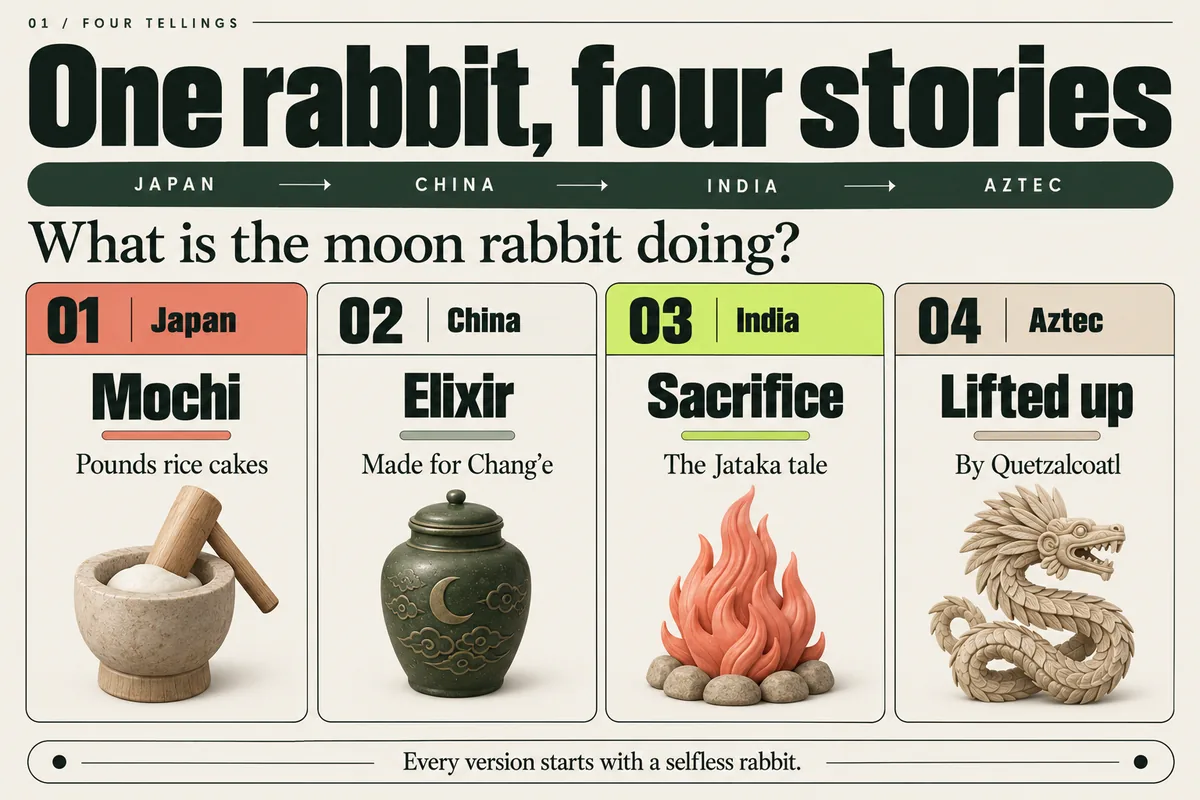
The Japanese version emphasizes the communal and ritualistic aspects of making mochi, symbolizing unity and shared effort. In contrast, the Chinese version focuses on the rabbit's role in creating the elixir of life, symbolizing immortality and the pursuit of eternal youth. This difference in focus reflects the distinct cultural values and beliefs of Japan and China, yet both versions share the common theme of the rabbit's selflessness and dedication.
| Tradition | What the rabbit does | Source | |---|---|---| | Japan | Pounds rice for mochi | Folk tradition; Konjaku Monogatarishu telling | | China | Pounds the elixir of life for Chang'e | Han-era sources and later folklore | | Buddhist India | Offers itself as food and is drawn on the moon | Jataka tale | | Aztec | Lifted to the moon by Quetzalcoatl | Mesoamerican legend |
The Buddhist Jataka Story Behind It
The legend of the moon rabbit has its roots in a Buddhist Jataka tale, specifically the Sasa Jataka (Jataka tale 316). This tale recounts the story of a selfless rabbit who offers its own body as food to a hungry old man. The man, revealed to be the god Sakra (known as Taishakuten in Japan), is so moved by the rabbit's act of selflessness that he draws the rabbit's image on the moon to honor its sacrifice. This story has been retold and adapted in various forms, including the Konjaku Monogatarishu, a late Heian-period story collection that features the rabbit alongside a fox and a monkey.
The story of the rabbit's selflessness is a powerful moral lesson, emphasizing the value of compassion and sacrifice. It has been a source of inspiration for artists, writers, and philosophers throughout Japanese history. The rabbit's image on the moon serves as a constant reminder of these virtues, reinforcing the importance of altruism and kindness in Japanese culture.
Tsukimi: Moon Viewing and the Rabbit
Tsukimi, the Japanese autumn moon-viewing custom, is a significant cultural event held around the full moon of the eighth lunar month. During Tsukimi, people gather to admire the full moon and make offerings of tsukimi dango (rice dumplings) and susuki pampas grass. The rabbit, as a symbol of the moon, is a common image during this festival. The legend of tsuki no usagi adds a layer of mystique and tradition to the celebration, connecting modern observances to ancient folklore.
Tsukimi is not just a time for admiring the moon's beauty but also for reflecting on the deeper meanings associated with it. The moon rabbit, with its story of selflessness, serves as a reminder of the importance of community, gratitude, and shared experiences. Families and friends come together to enjoy the moon's light, share food, and appreciate the natural world, reinforcing the bonds of community and the values of Japanese culture.
The Moon Rabbit in Japanese Art and Design
The moon rabbit is a popular motif in Japanese art and design. It often appears alongside the moon, waves (known as namiusagi, a rabbit running over waves), and autumn grasses on textiles, kimono patterns, lacquer, and prints. The rabbit symbolizes good fortune, fertility, and the moon, making it a beloved and enduring image in Japanese culture. From traditional crafts to modern designs, the moon rabbit continues to inspire artists and designers, carrying the legacy of this ancient legend into the contemporary world.
The moon rabbit has been depicted in various forms of Japanese art, from ancient woodblock prints to modern digital illustrations. In traditional art, the rabbit is often shown in a serene and contemplative pose, reflecting the peaceful and mystical nature of the moon. In contemporary design, the rabbit is reimagined in bold and vibrant styles, appealing to a new generation while maintaining the cultural significance of the legend.
Wearing the Legend: Usagi Motifs Today
The legend of the moon rabbit has transcended traditional art forms and found its way into modern fashion. Sukaizen, a brand inspired by the post-war Yokosuka sukajan tradition, offers machine-embroidered apparel featuring the moon rabbit and other traditional motifs. The usagi moon rabbit reversible sukajan, for example, showcases the moon rabbit pounding mochi beneath a full moon on the back of a wine-coloured rayon satin side, with a solid wine reverse carrying a small moon at the hip.
Other designs, such as the wolf and moon sukajan, further explore the rich tapestry of Japanese folklore in contemporary fashion.
For a quieter take on the night sky, the tanuki and moonlit pine haori places pine and moon across the upper back of a forest-green cotton twill haori.
Frequently Asked Questions
What is the story behind the rabbit on the moon?
The story behind the moon rabbit is rooted in a Buddhist Jataka tale where a selfless rabbit offers its body as food to a hungry old man, who is revealed to be the god Sakra. To honor the rabbit's sacrifice, Sakra draws its image on the moon. In Japan, this legend is known as tsuki no usagi, where the rabbit is depicted pounding rice into mochi.
What does a rabbit in the moon mean?
The rabbit in the moon is a symbol of selflessness and sacrifice, stemming from a Buddhist Jataka tale. In Japanese culture, it also represents good fortune, fertility, and the moon. The rabbit's activity of pounding mochi is linked to the moon-viewing custom Tsukimi, where it is a common image.
Are there rabbits on the moon?
No real rabbits live on the moon. The moon rabbit is a pattern of dark lunar plains (lunar maria) that create the illusion of a rabbit. This pattern is visible from Earth and has inspired numerous cultural legends and traditions.
Where is the rabbit on the moon?
The pattern of the moon rabbit is formed by the dark lunar maria, which are basaltic plains on the near side of the moon. From the northern hemisphere, the rabbit's ears point toward the upper left of the full moon, with the pounding mortar to its right.
How do you spot the rabbit on the moon?
To spot the moon rabbit, look at a full moon and find the dark patches. The rabbit's ears point to the upper left, and the mortar sits to the right. This view is best seen from the northern hemisphere and has been a source of inspiration and wonder for centuries.
Conclusion
The legend of the moon rabbit, or tsuki no usagi, is a rich and enduring part of Japanese culture. From its roots in a Buddhist Jataka tale to its role in the moon-viewing custom Tsukimi, the rabbit continues to inspire art, design, and even modern fashion. Whether you're admiring the full moon or wearing a piece of apparel that carries this ancient motif, the moon rabbit remains a powerful symbol of selflessness and tradition.


